










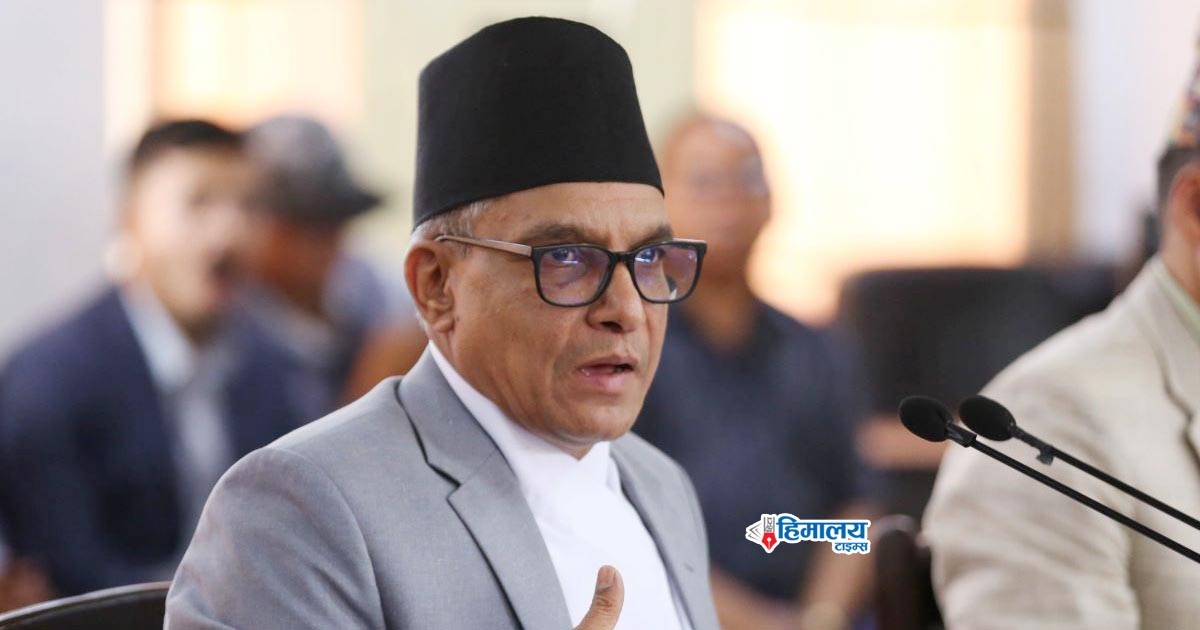



Kathmandu, May 19: Proposed Chief Justice Dr Manoj Kumar Sharma has said that he will work to increase access to justice by using information technology in the country.
Presenting his future action plan at the Parliamentary Hearing Committee earlier today, Sharma said that he will make judicial work transparent and predictable, thereby increasing the effectiveness of overall justice delivery and easy access to justice for service recipients.
Maximum use of information technology shall be ensured in the judiciary in accordance with the concept of e-court. Since the judiciary is an institution that lives on the trust of citizens, it is necessary for the judiciary to always be sensitive and active to increase public trust, he said.
Since the workload of the judiciary is continuously increasing, the action plan includes accelerating the disposal of cases. “There is a need to give special priority to the issue of maintaining good governance in the judiciary, while being serious and sensitive to the concerns regarding the state of good governance.”
Proposed Chief Justice Dr Sharma said that the judiciary will be transformed into a technology-enabled judiciary by establishing an information technology-friendly court and through the formulation and effective implementation of the judiciary’s policy and master plan.
He said that through the upgrading of information technology, the processes from case registration to judgment writing and implementation will be integrated into the information technology system within a year by developing software and modules.
On the work plan of the future Chief Justice, members of the committee, Padma Aryal, Barshaman Pun, Deepak Raj Bohara, Prem Dangal, Kabindra Burlakoti, Rajiv Khatri, Madhu Kumar Chaulagai and others raised questions on the controversy related to the judiciary, corruption, malpractices and anomalies, disputes between the bar and the bench, pressure being exerted not to register writ petitions in the court against the bench, etc.
Proposed Chief Justice Dr. Sharma said that there are no factions in the judiciary and since the work of registering writ petitions or filing writ petitions is purely the administration's responsibility, the administration will work on it independently.
Janai Purnmina Being Marked Today
Catastrophic Flash Flood In Bhotekoshi
Water Level Again Increases In
Forgiveness Ritual Held At Palanchowk
Rasuwa’s Road Connection Restored
Bhotekoshi Flashflood: Rs 1.91 Billion