








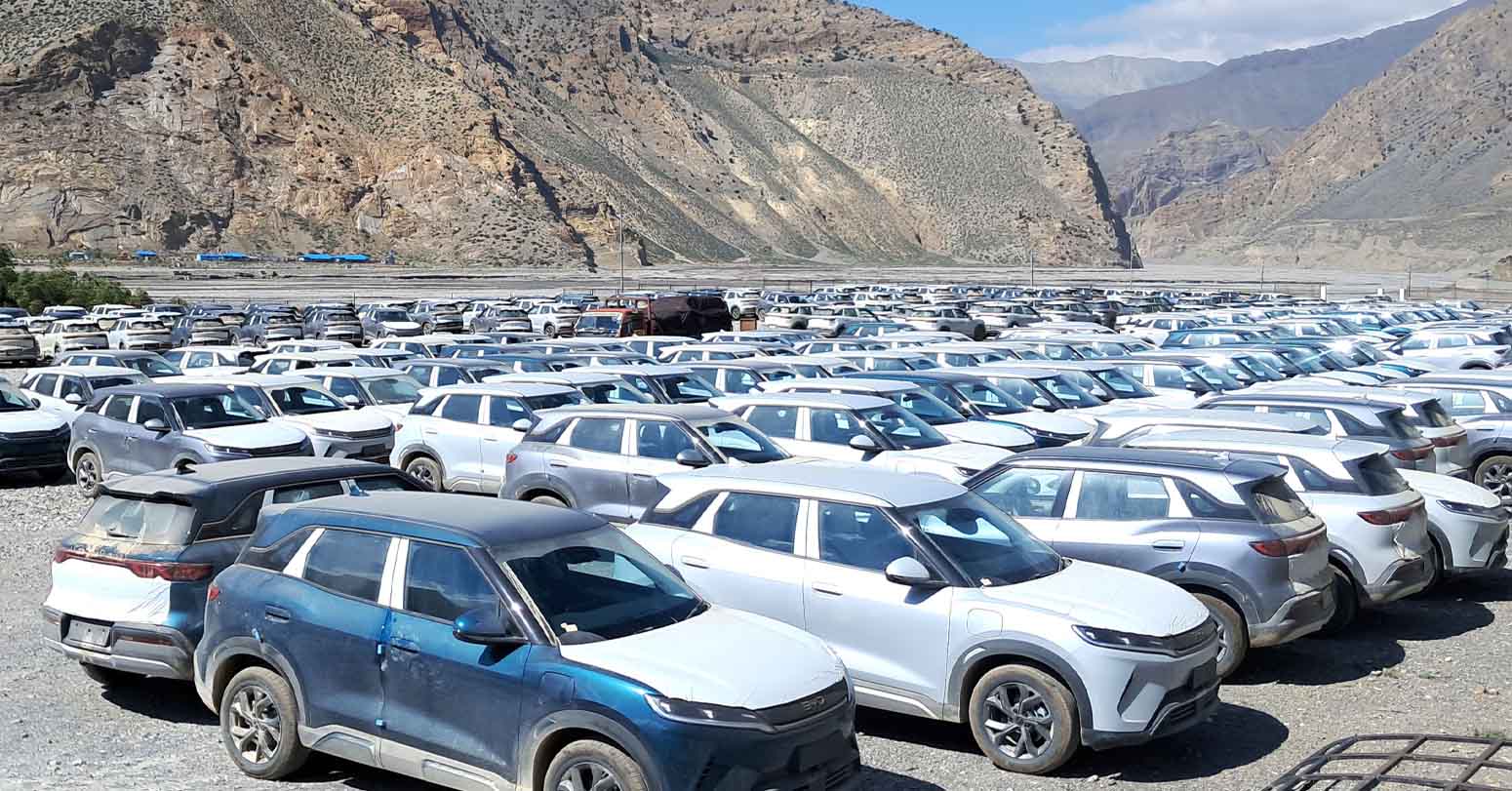





The Armed Police Force Nepal have seized 774 BYD electric vehicles that entered Nepal through the Korala border checkpoint in Mustang. The vehicles were confiscated from Jomsom, Kusma in Parbat, and Hemja in Kaski during operations conducted on Wednesday night and Thursday morning on suspicion of customs-related irregularities and potential tax evasion.
According to APF spokesperson Bishnu Prasad Bhatta, two vehicles were also seized from Pasanglhamu Road in Nuwakot.
DIG Bhatta stated that the vehicles were taken under control for further investigation following allegations that information regarding revised tax rates on electric vehicles may have been leaked prior to the announcement of the national budget. He noted that most of the vehicles lacked registration number plates and were being transported to various districts.
“The vehicles have been seized for detailed investigation into possible manipulation of tax-related information before the budget announcement,” Bhatta said. “If irregularities are confirmed in customs procedures, tax assessments, or pre-budget import activities, legal action will be initiated against the individuals and institutions involved.”
Government agencies launched the investigation after reports emerged that certain vehicles may have been inspected and cleared through customs before the budget announcement through alleged collusion among customs officials, customs agents, and traders. The government recently revised the tax structure applicable to electric vehicles in the budget for fiscal year 2083/84.
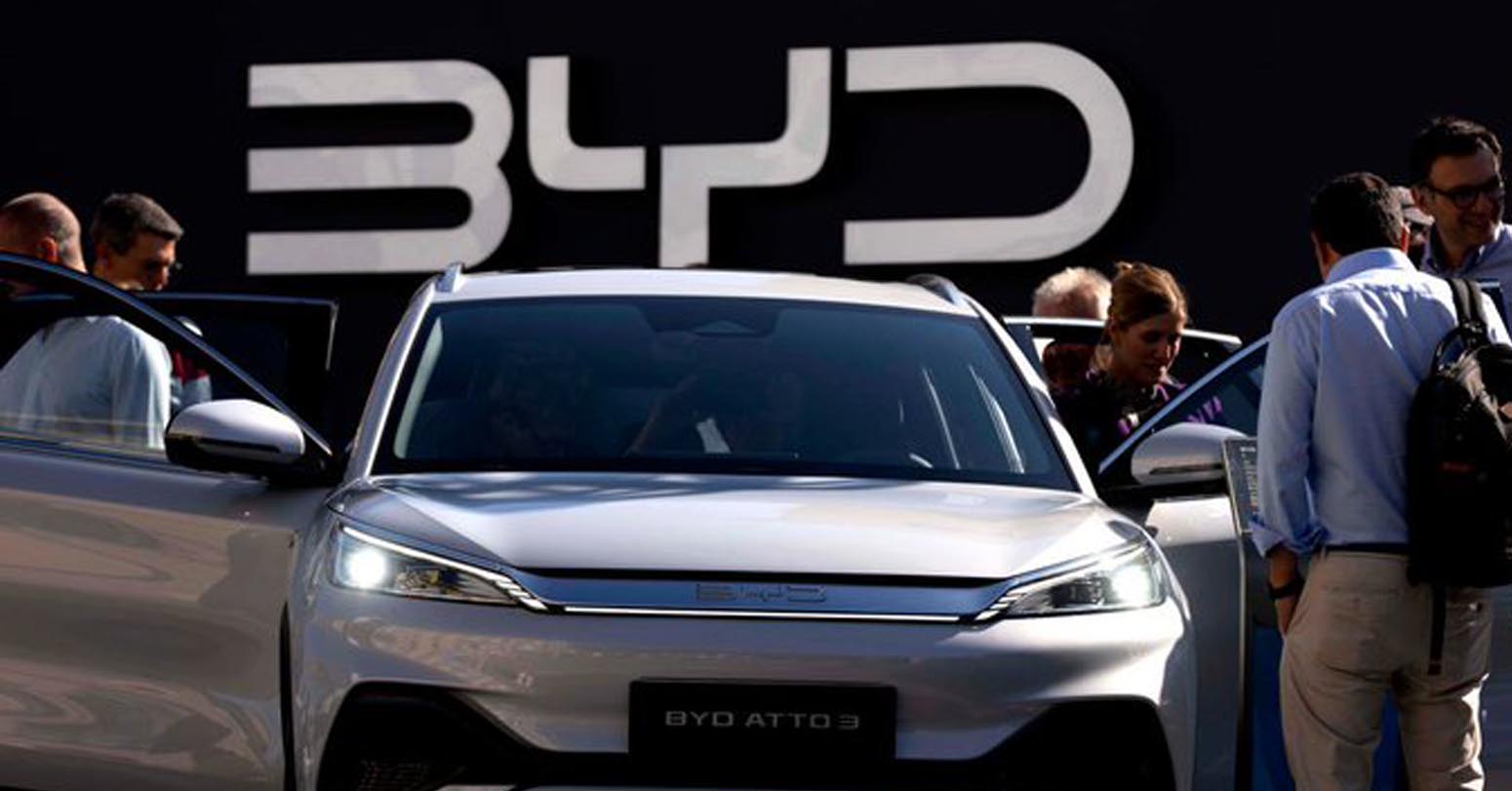
The controversy has drawn attention to Cimex Inc. Pvt. Ltd., the authorized distributor of Chinese electric vehicle manufacturer BYD in Nepal. Previous reports alleged that the company had obtained customs inspection and clearance for vehicles before their physical arrival in Nepal.
Sources claim that, following the budget announcement, hundreds of vehicles were allegedly cleared through customs in coordination with customs officials despite not having physically arrived at the customs point. The Ministry of Finance and the Department of Customs are reportedly investigating both Cimex Inc. and officials at the Rasuwa Customs Office.
A high-level source indicated that a special investigation team has been deployed to the Rasuwagadhi border checkpoint to examine the matter. Under the Customs Act, goods are generally required to be physically present within the customs area before inspection and clearance can take place.
In connection with the investigation, the Department of Customs has recalled six officials, including Rasuwa Customs Chief Tulsi Prasad Bhattarai. They are alleged to have facilitated customs-related irregularities involving the import of BYD electric vehicles.
Attempts to contact Yamuna Shrestha, Managing Director of Cimex Inc., for comment were unsuccessful.
Cimex Inc. has previously faced allegations of under-invoicing imported vehicles to reduce tax liabilities. The recurrence of such allegations has raised concerns regarding the effectiveness of regulatory oversight and enforcement mechanisms.
An investigation by the Revenue Investigation Department and the Central Investigation Bureau (CIB) into allegations of under-invoicing high-capacity electric vehicles and obtaining customs and excise duty exemptions is reportedly nearing completion. Few years ago, the Revenue Investigation Department conducted a raid on Cimex Inc. over allegations that the company had misrepresented the capacity of BYD electric vehicles to claim tax exemptions worth millions of rupees. However, despite more than two years having passed and several changes in departmental leadership, the investigation remains unresolved.
The Office of the Auditor General has also highlighted concerns regarding the underassessment of taxes on certain electric vehicles imported through the Rasuwa and Tatopani border points. According to its report, some vehicles were allegedly declared with capacities below their actual specifications, particularly at 99 kW, enabling them to qualify for lower tax rates. The report estimated a potential revenue risk of approximately Rs 3.77 billion.
Under Nepal’s tax framework, electric vehicles with motor capacities below 100 kW are subject to lower customs and excise duties, while those exceeding that threshold attract higher tax rates. Allegations of manipulating motor capacity specifications to benefit from lower taxation have persisted for several years.
In response to the allegations, Cimex Inc., the official distributor of BYD electric vehicles in Nepal, issued a statement on Thursday denying any wrongdoing. The company described the allegations concerning vehicle imports and customs clearance as baseless.
According to the statement, all BYD vehicles that entered Nepal and completed customs clearance before the announcement of the fiscal year 2083/84 budget were imported and processed in full compliance with existing laws, customs regulations, and established procedures. Cimex further stated that while some of the vehicles currently under discussion had already completed customs clearance, 226 vehicles had reached the customs area on the Chinese side but had not yet undergone inspection.
The company asserted that it had not received any special treatment, preferential benefits, or unauthorized customs facilities at any stage of the import process. It also stated that it had neither requested nor accepted such privileges.
Cimex explained that the vehicles were imported according to normal business planning, production schedules, transportation availability, inventory requirements, advance customer bookings, and growing market demand for electric vehicles.
The company further maintained that allegations suggesting it coordinated with government agencies to avoid tax changes or gain unfair advantages were false, unfounded, and harmful to its reputation. However, the statement released by the company did not include an official seal, company letterhead, or authorized signature.
Janai Purnmina Being Marked Today
Catastrophic Flash Flood In Bhotekoshi
Water Level Again Increases In
Forgiveness Ritual Held At Palanchowk
Rasuwa’s Road Connection Restored
Bhotekoshi Flashflood: Rs 1.91 Billion