







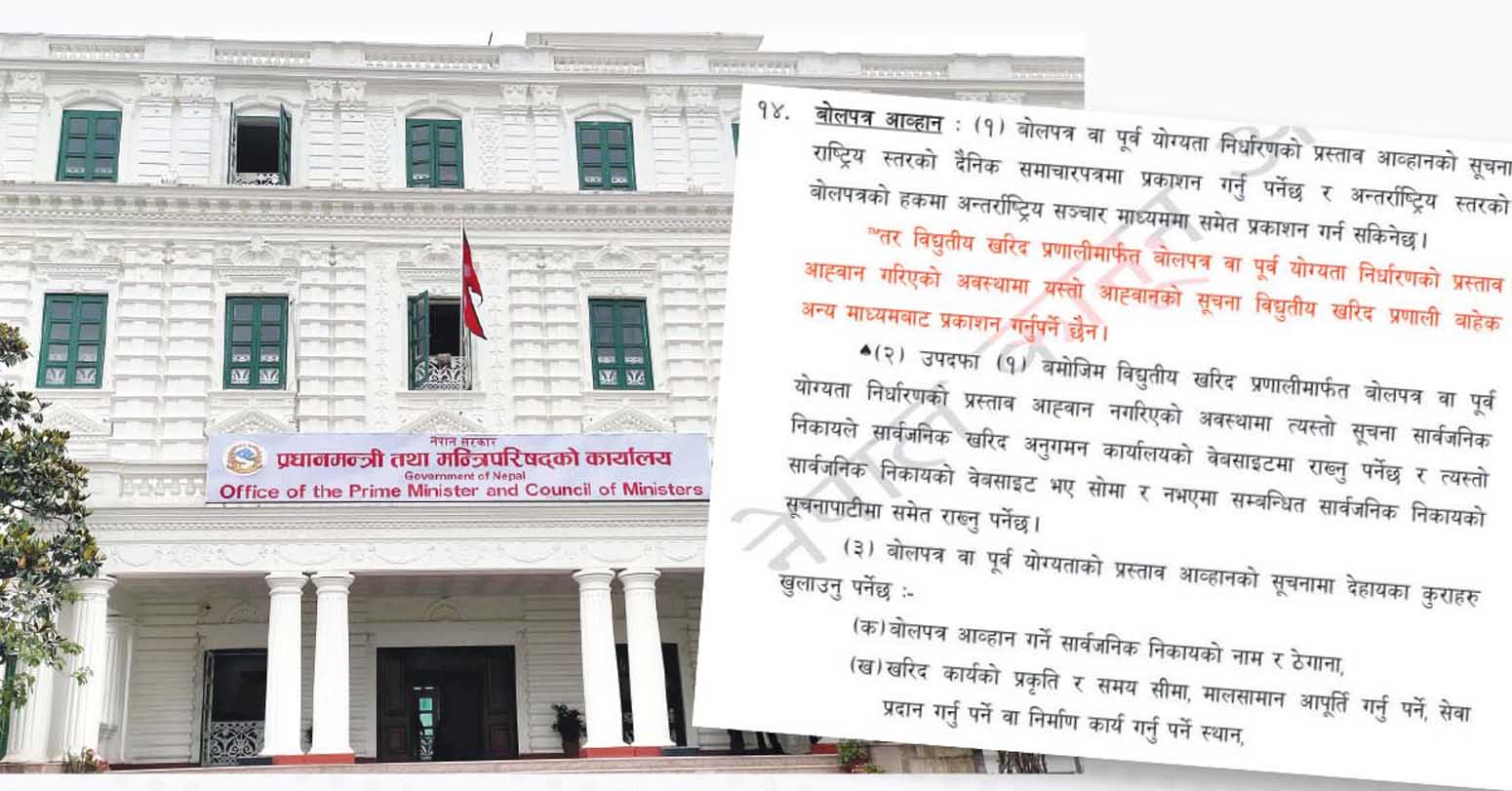







Advertisements from all three tiers of government have been prohibited from being published or broadcast through private media outlets. The Office of the Prime Minister and Council of Ministers has issued a circular to federal, provincial, and local governments, as well as their subordinate bodies, instructing them to disseminate government advertisements exclusively through state-owned media. Binod Regmi, Branch Officer of the Administration Branch of the Office, has formally communicated to all ministries, commissions, the offices of the seven Chief Ministers, and local governments nationwide, directing them to publish and broadcast all information and advertisements solely through government media.
The circular indicates that this measure has been implemented to ensure cost efficiency and enhance transparency in the dissemination of advertisements and information. According to the directive, government advertisements and information must now be published exclusively through state-owned media institutions such as Gorkhapatra Co-operation, Radio Nepal, and Nepal Television. It further specifies that the Government of Nepal, along with provincial and local governments and all publicly funded entities, are required to publish public procurement notices and other information only through these government-operated media outlets. Consequently, private media organizations will no longer be permitted to publish or broadcast government advertisements.
Additionally, the directive mandates that payments for such publications and broadcasts must be deposited solely into the official accounts of the respective media organizations. It also stipulates that the rates and applicable discounts must be approved by the concerned media institutions. As a result of this policy, private sector media will no longer receive government advertisements. Given that many print and broadcast media outlets rely heavily on government advertising as a primary source of revenue, stakeholders have expressed serious concerns. They argue that implementing a centralized advertising policy limited to government media may lead to the closure of numerous media organizations. Currently, state-owned media include Nepal Television, Radio Nepal, Gorkhapatra, Rising Nepal, and RSS.
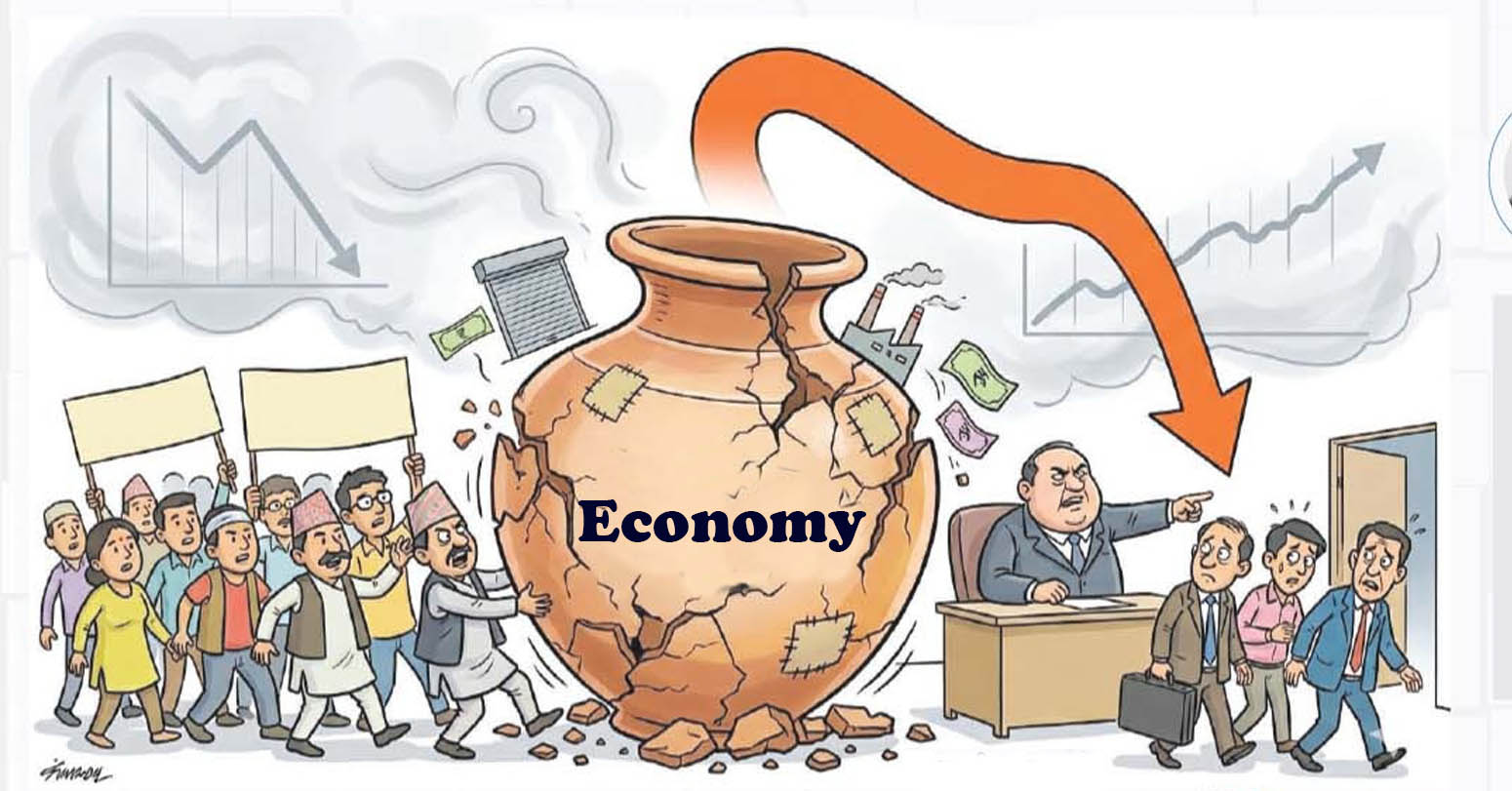
Media entrepreneurs and professionals from the private sector have criticized the decision, stating that it will eliminate a crucial revenue stream for private newspapers, radio stations, television channels, and online platforms, thereby adversely affecting the entire media industry in Nepal. Many media outlets depend significantly on government advertising for survival. Furthermore, following the COVID-19 pandemic and the ‘Gen-Z’ movement of last September, the private sector has not recovered as expected, resulting in reduced economic activity and a weakened advertising market. Stakeholders contend that the new policy will further exacerbate the financial crisis faced by private media and could force many outlets to shut down. They have accused the government of attempting to undermine private media through financial restrictions during an already challenging period.
Attempt to Undermine Private Media
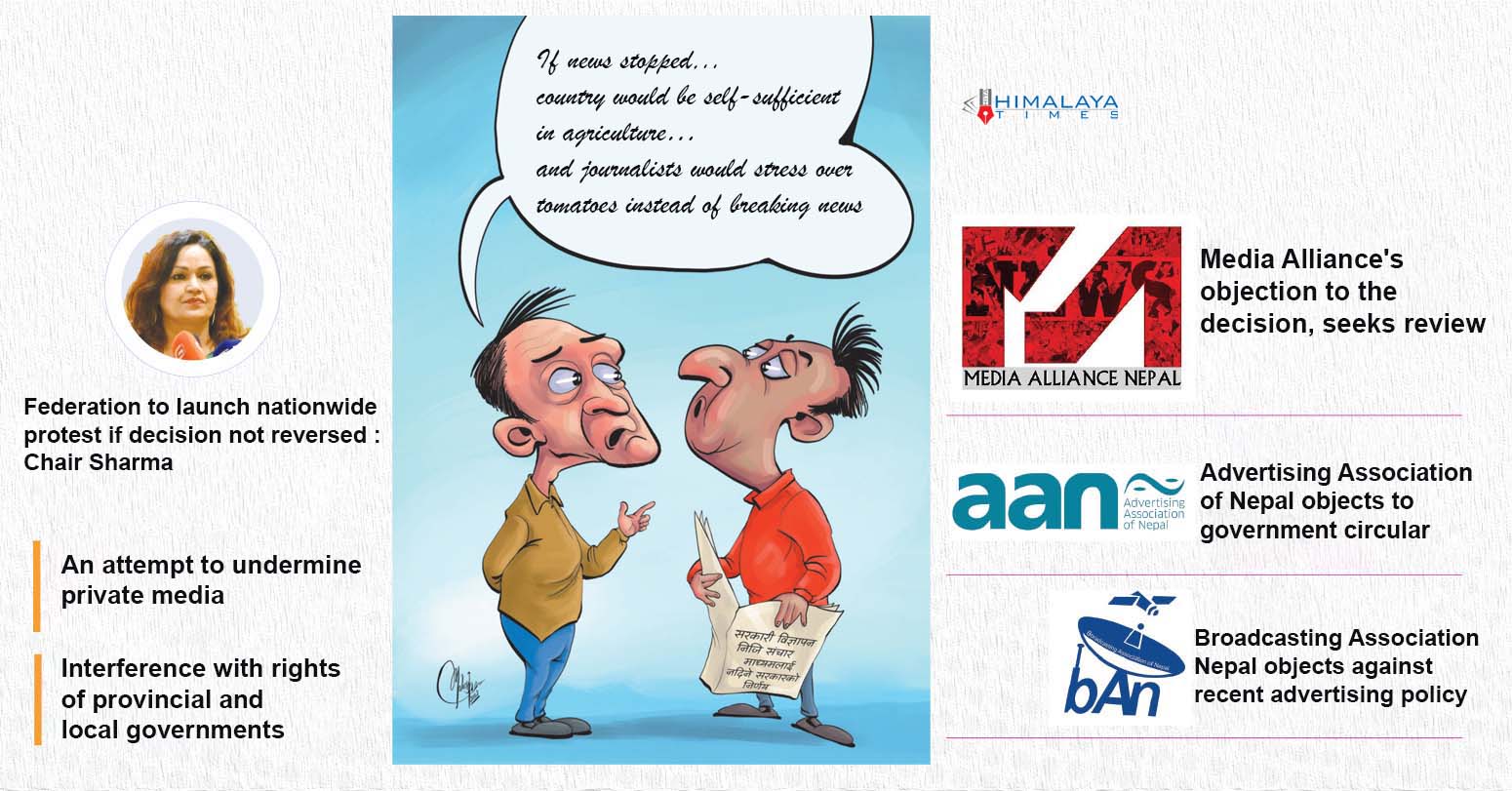
The media sector has strongly opposed the government’s decision to allocate advertisements exclusively to state-owned media. The Federation of Nepali Journalists has expressed serious concern, interpreting the move as an attempt to dismantle private and independent media while restricting citizens’ freedom of expression.
Federation President Nirmala Sharma stated that the government’s decision constitutes an attack on the media during a period of economic hardship. She emphasized that, at a time when the state should be providing incentives and support, withdrawing advertising revenue places small-scale media outlets, including radio and television stations, at risk of closure. She further warned that rural radio stations, which depend heavily on local-level advertisements, face an existential threat. According to her, the private media sector is already financially weakened due to the impacts of COVID-19 and the broader economic downturn, and this policy could accelerate its decline.
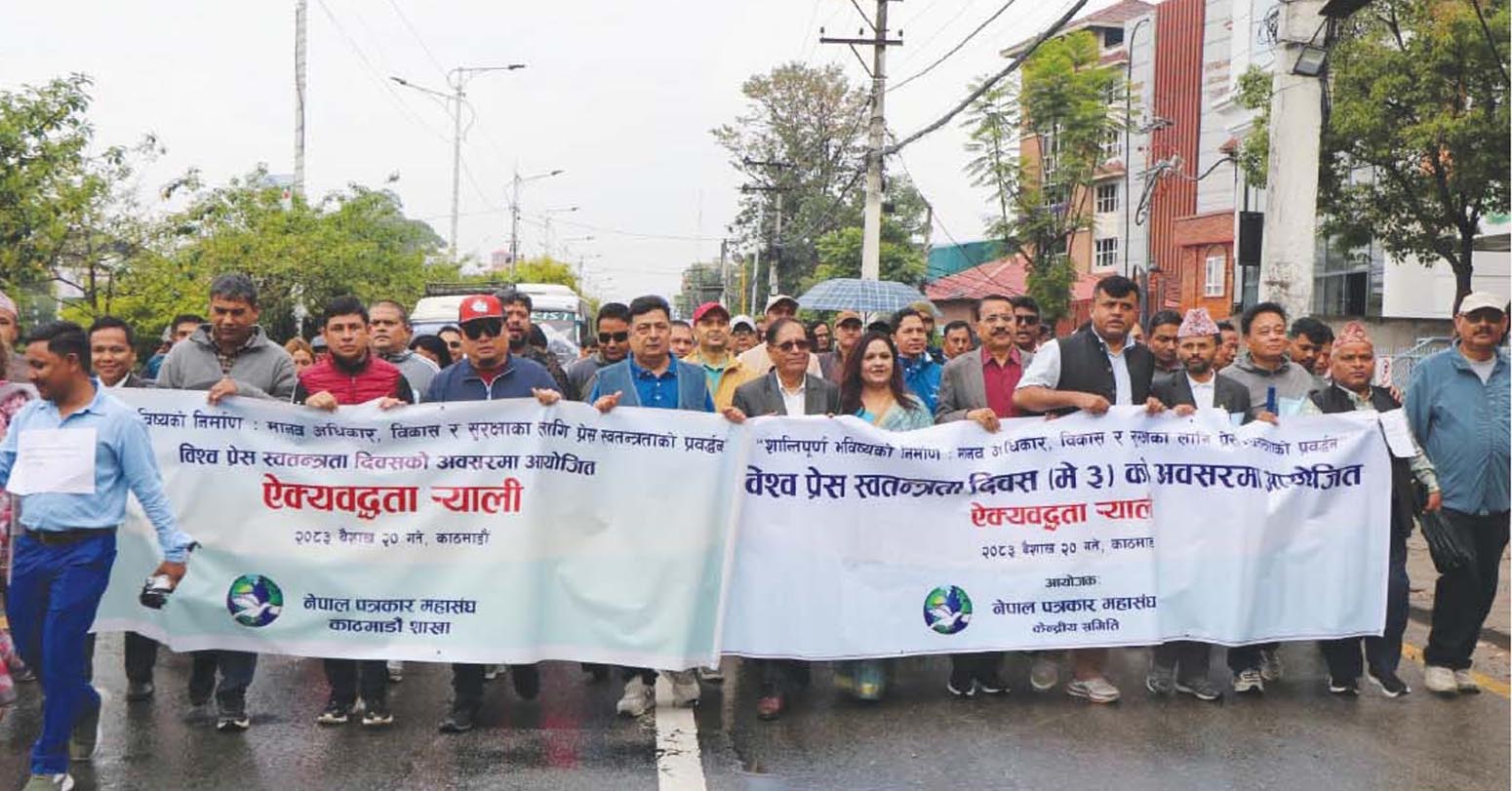
Similarly, the Kathmandu branch of the Federation of Nepali Journalists has condemned the decision, describing it as a direct interference in press freedom and calling for its immediate reversal. The branch asserted that the policy is not merely a flawed approach but a deliberate attempt to financially incapacitate and ultimately eliminate independent media outlets.
Nepal Press Union President Shiva Lamsal also criticized the circular, alleging that it aims to weaken and shut down private media. He characterized the move as an initial step toward restricting press freedom and exerting control over the media sector. He warned that limiting public information dissemination to government media undermines the financial sustainability of private outlets and reflects an intention to control the media landscape. He urged the government to reconsider the policy in order to safeguard press freedom and preserve independent media.
Likewise, both the Kathmandu and Himalaya Times branches of the Federation of Nepali Journalists have voiced strong objections, demanding the immediate withdrawal of the decision and associated directives.
Interference with Rights of Provincial and Local Governments
Press Center Nepal has expressed serious concern regarding the directive, stating that it undermines the private and community media sectors. In a statement issued by General Secretary Manoj Gharti Magar, the organization argued that the policy weakens a sector that has played a vital role in Nepal’s political transformation and democratic development. It further contended that the federal government’s imposition of such directives on provincial and local governments violates the principles of federalism by infringing upon their rights.
The organization warned the government against neglecting a sector that provides livelihoods for thousands of journalists and media workers, and accused it of maintaining a discriminatory approach between public and private media.
Media Society Nepal President Madan Prasad Lamsal also criticized the decision, stating that it reflects a lack of proper understanding. While acknowledging that the policy may have been intended to address irregularities in advertising practices, he argued that weakening private media financially is not an appropriate solution. He described the decision as regrettable and suggested that it indicates an intention to shut down mainstream private media.
Advertising agencies have similarly raised concerns, noting that the policy will hinder effective communication with target audiences, disrupt creative advertising practices, and negatively impact the established private media industry. They emphasized that media selection should align with the objectives and audience of each advertisement, and restricting dissemination to government media increases the likelihood of ineffective outcomes. The agencies also warned that the policy may undermine existing regulatory provisions regarding the use of advertising agencies. They have called on the government to adopt a more flexible approach to ensure effective public communication.
Potential Nationwide Protest
Federation President Nirmala Sharma has stated that the decision violates both federal principles and constitutional provisions. She argued that provincial and local governments possess autonomy under the constitution, including the authority to manage and collaborate with media according to their own policies. Centralizing advertising decisions, she asserted, directly contradicts the spirit of federalism.
She further warned that the policy poses risks to press freedom and self-regulation, as financial constraints may lead to self-censorship within the media. Highlighting the role of private media in holding the government accountable, she cautioned that restricting advertising revenue weakens democratic institutions. Sharma also noted that the decision was made without adequate consultation, lowering the morale of journalists and investors. She announced that the federation is preparing for nationwide protests and will continue demonstrations until the decision is reversed.
Media Alliance Nepal and Stakeholder's Response
Media Alliance Nepal has also expressed strong opposition, describing the decision as inconsistent with constitutional guarantees of freedom of expression, access to information, and equality. The alliance warned that concentrating information dissemination within a limited number of media outlets restricts citizens’ access to diverse perspectives and fosters inequality within the media sector.
In a statement issued Thursday, the Alliance said the move violates constitutional guarantees of freedom of expression, the right to information, and equality. It warned that concentrating information within limited outlets risks restricting citizens’ access to diverse sources while fostering inequality and discrimination in the media sector.
The alliance emphasized that a pluralistic and independent media environment is essential for democratic practice and cautioned that the policy could weaken private media further at a time when they are still recovering from the post-COVID-19 economic downturn. It also highlighted potential negative impacts on competition, employment, and citizens’ access to information. It also raised concerns about potential political bias and indirect control, calling the policy contrary to the principles of a free and fair press.
Citing international standards, including the Universal Declaration of Human Rights and the International Covenant on Civil and Political Rights, the alliance underscored the state’s obligation to ensure diversity, independence, and impartiality in information dissemination. It has called for the immediate withdrawal of the decision, the establishment of a transparent and competitive advertising system, and the development of long-term policies in consultation with stakeholders. The alliance has also warned of possible legal action if its demands are not addressed.
Similarly, the Advertising Association of Nepal has objected to the circular, stating that it will weaken private media and disrupt the competitive advertising market. The association criticized the decision as unilateral and stressed the importance of diversity and equal opportunity in media engagement. It argued that restricting advertisements to government media reduces effectiveness and raises concerns regarding the efficient use of public resources. The association has called for immediate revision or withdrawal of the policy.
The Broadcasting Association of Nepal has likewise condemned the decision, warning that it will harm private media and restrict freedom of expression. The association noted that private media organizations, already facing financial challenges due to the pandemic and economic slowdown, could be pushed toward closure as a result of losing advertising revenue. It also criticized the lack of stakeholder consultation and warned that the policy undermines constitutional rights. It has urged the government to reverse the decision, cautioning that it may initiate further protest actions if necessary.
Janai Purnmina Being Marked Today
Catastrophic Flash Flood In Bhotekoshi
Water Level Again Increases In
Forgiveness Ritual Held At Palanchowk
Rasuwa’s Road Connection Restored
Bhotekoshi Flashflood: Rs 1.91 Billion