














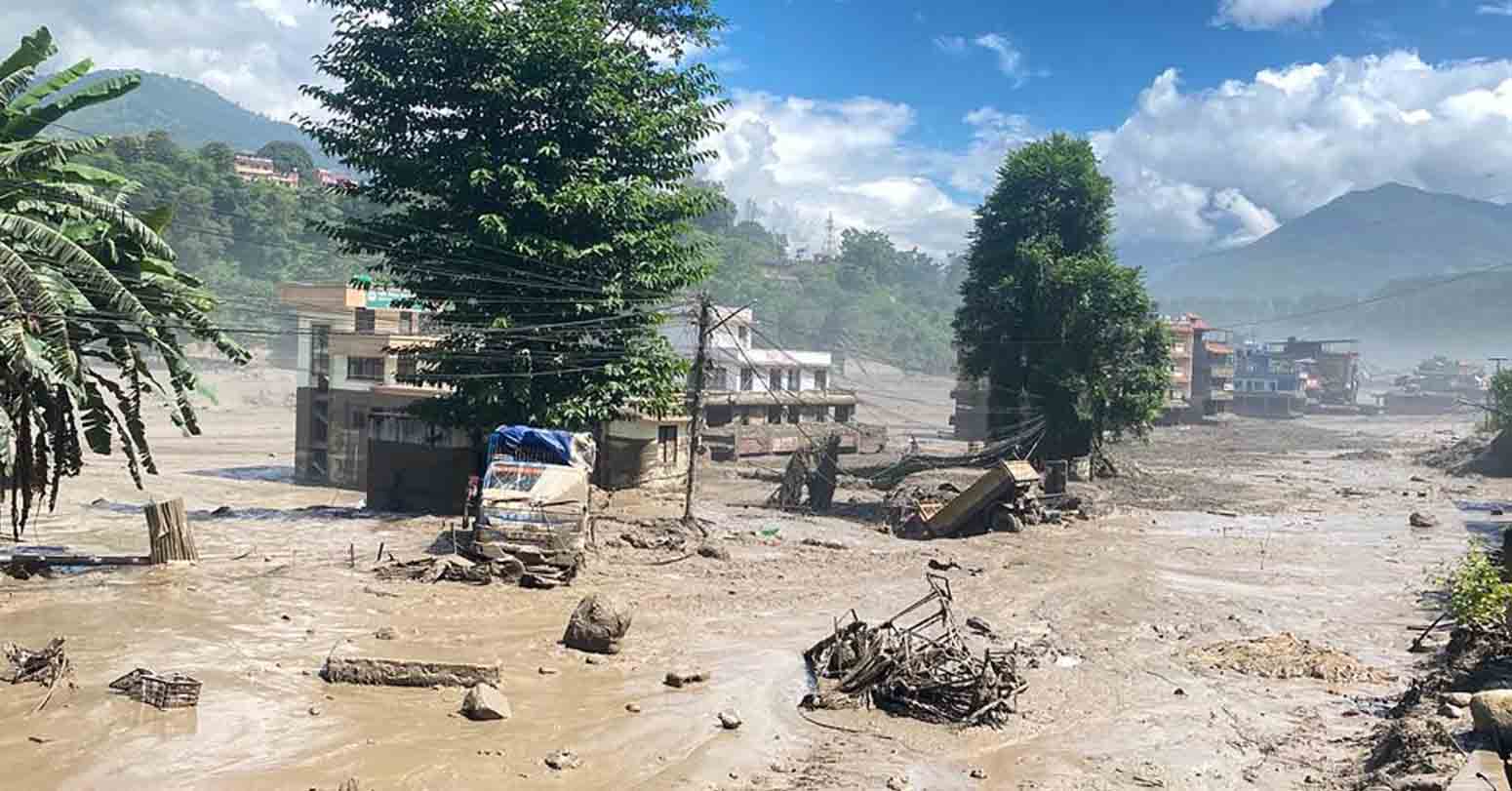
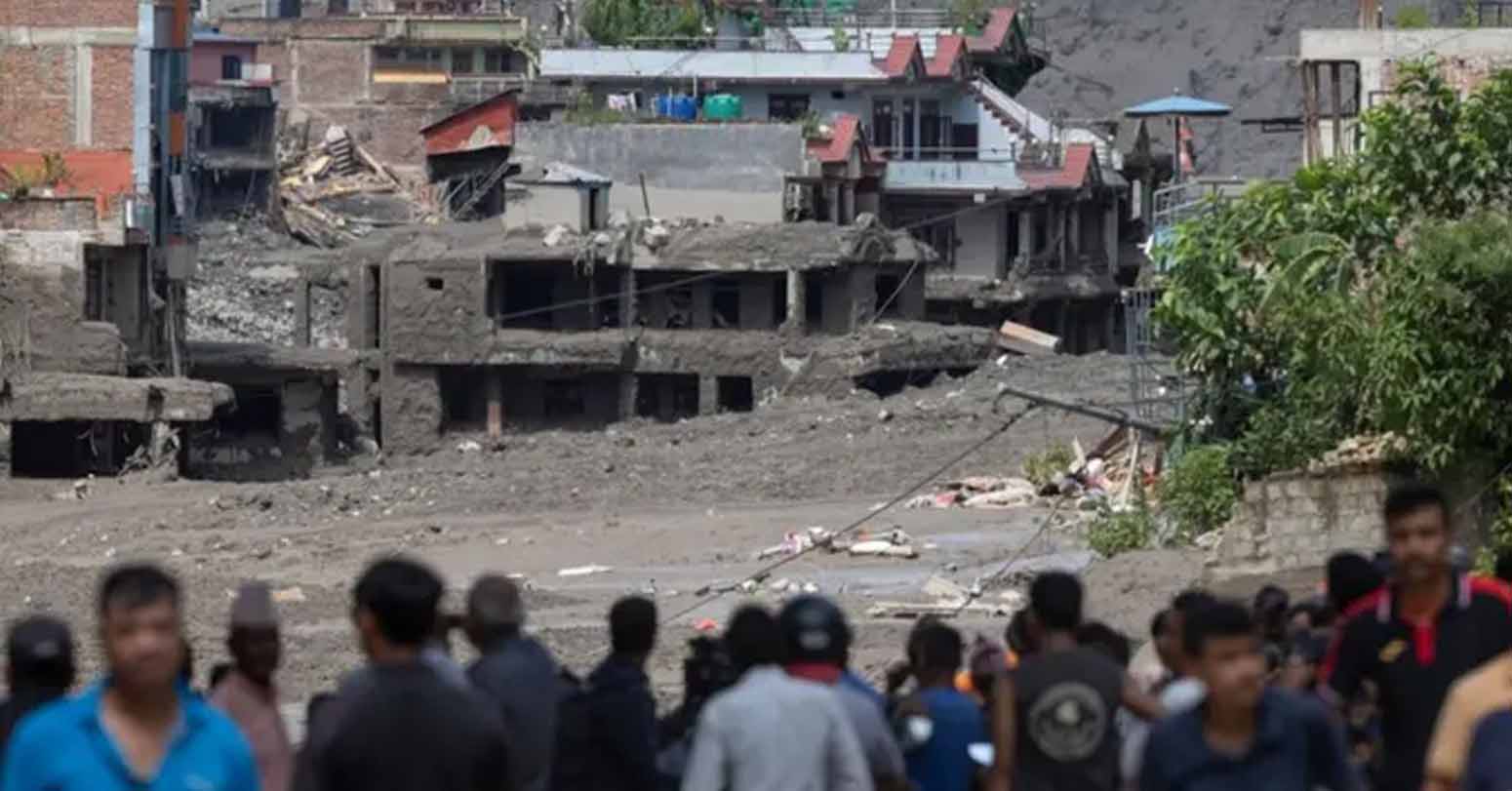
Kathmandu, May 11: Below-average rainfall has been predicted during this year’s monsoon. However, the risk of monsoon-related disasters remains high due to rising temperatures and intense monsoon activity.
According to a draft of the Monsoon Preparedness and Response National Action Plan 2083 BS unveiled today, over 1.9 million people are likely to be affected by this year’s monsoon. The document was released by the National Disaster Risk Reduction and Management Authority.
The draft suggests an increased risk of glacial lake outburst floods, while the Tarai and southern plains are likely to face floods, landslides, inundation, soil erosion, and flash floods. Rising daily temperatures and heat waves are expected to particularly affect the southern Tarai region.
The document states that 1,997,731 people across 457,145 households nationwide are likely to be affected by the monsoon. Among them, 52 percent are women and 48 percent are men.
Among the vulnerable population, 164,060 are children under five years of age, while the number of senior citizens exceeds 401,500. Similarly, around 48,000 people are persons with disabilities, and a significant number of women are in the reproductive age group.
As per the provincial analysis, the risk of monsoon-related disasters is relatively high in some districts of Koshi, Madhesh, Lumbini, and Sudurpaschim provinces.
The federal, provincial, and local governments have been urged to strengthen disaster preparedness and improve rescue and response management effectively.
According to the provincial analysis, the risk of monsoon-related disasters is relatively high in Koshi, Madhes Lumbini and some districts of the Far-Western Province. To make disaster preparedness and rescue management effective, the provincial and local levels have been asked to prepare on the basis of risk analysis.
The undersecretary of the authority, Ram Bahadur KC, said that he has instructed the concerned bodies to strengthen the early warning system, identification of safe places, preparation of relief materials and rescue mechanisms to reduce the damage caused by monsoon disasters.
The Department of Hydrology and Meteorology has predicted that Nepal will receive less than normal rainfall during the monsoon period and the temperature will increase relatively.
According to the authority, there is a possibility of 55 to 65 percent less than normal rainfall in the southern part of Karnali Province, most of Lumbini Province, the eastern part of Madhes Province and the southern part of Koshi Province this year.
The authority said there is a 45-55 percent chance of above normal rainfall in most parts of the far-western region, the western part of Madhesh province and the central part of Koshi province.
In the northern part of Karnali and Koshi provinces, the probability of light rain is 35 to 45 percent. In most of the remaining areas, there is a 35-45 percent chance of below-normal rainfall.
The department said that towards the maximum temperature, there is a possibility of 55 to 65 percent more than normal in different parts of Far-Western, Karnali, Lumbini, Gandaki, Bagmati, Madhesh and Koshi provinces.
According to the department, the minimum temperature is likely to be above normal across the country. Minimum temperatures are likely to be above normal by 55 to 65 per cent, especially in some areas of Far-Western, Karnali, Bagmati, Madhesh and Koshi provinces.
Janai Purnmina Being Marked Today
Catastrophic Flash Flood In Bhotekoshi
Water Level Again Increases In
Forgiveness Ritual Held At Palanchowk
Rasuwa’s Road Connection Restored
Bhotekoshi Flashflood: Rs 1.91 Billion