










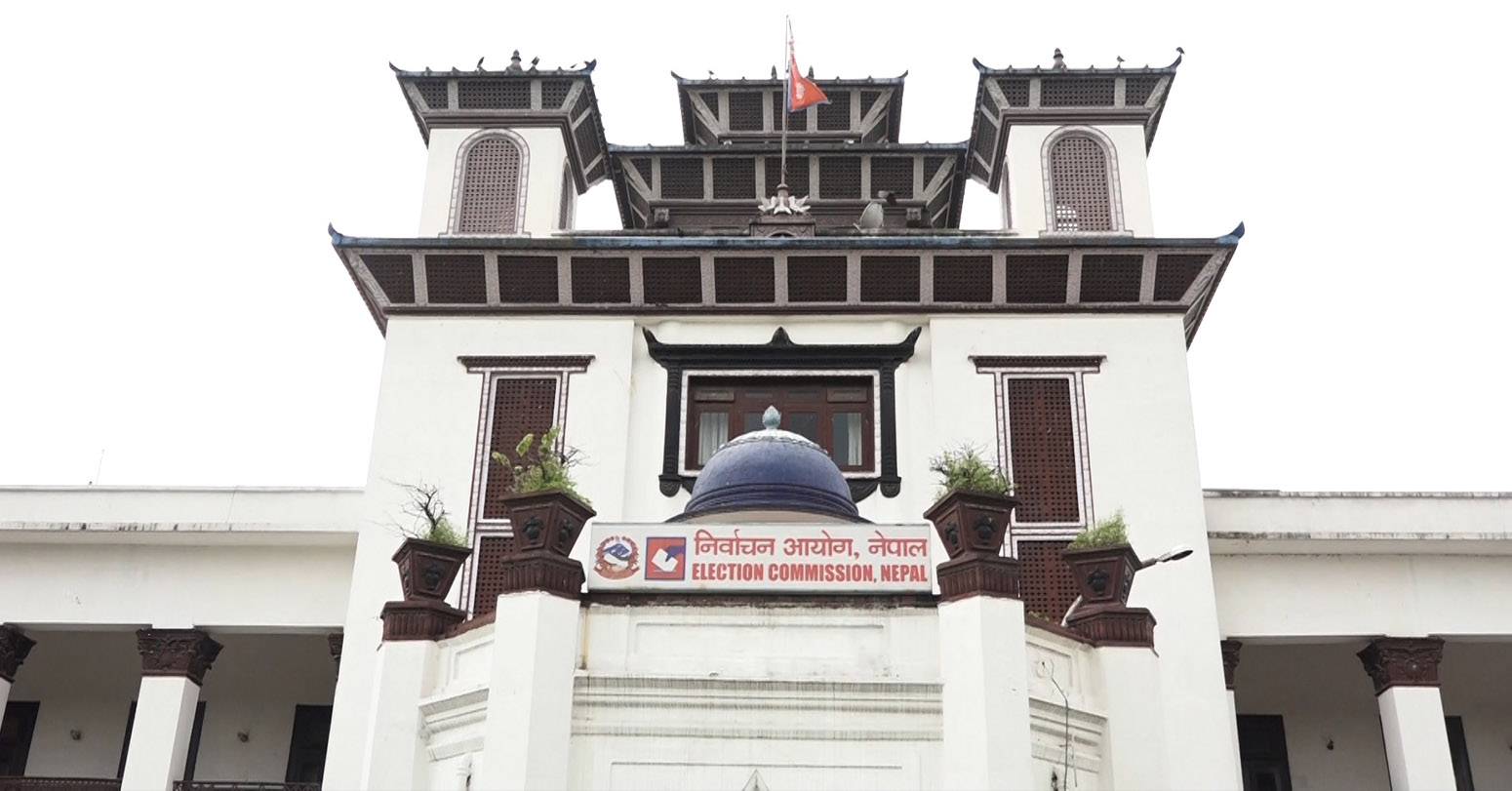

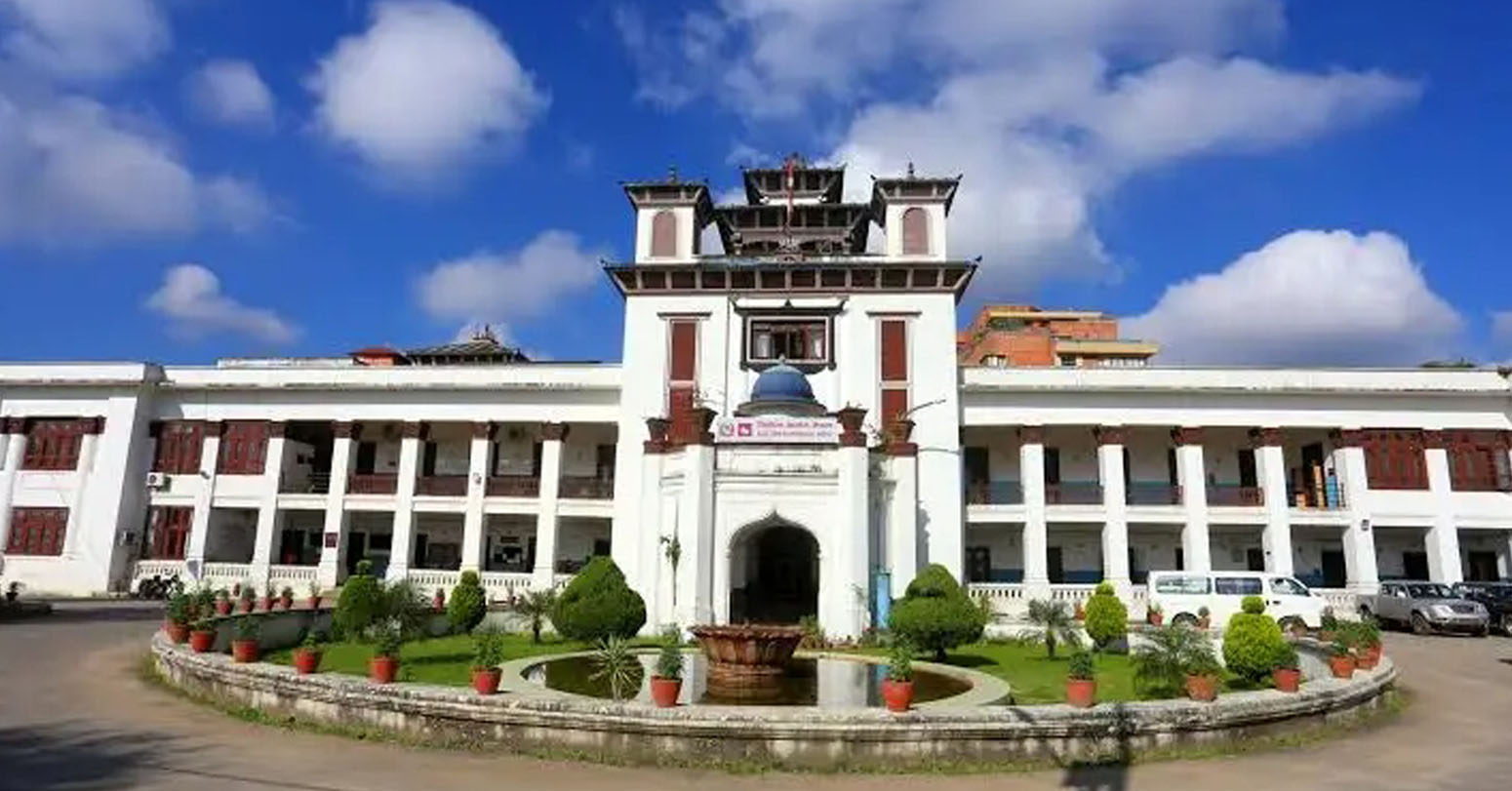
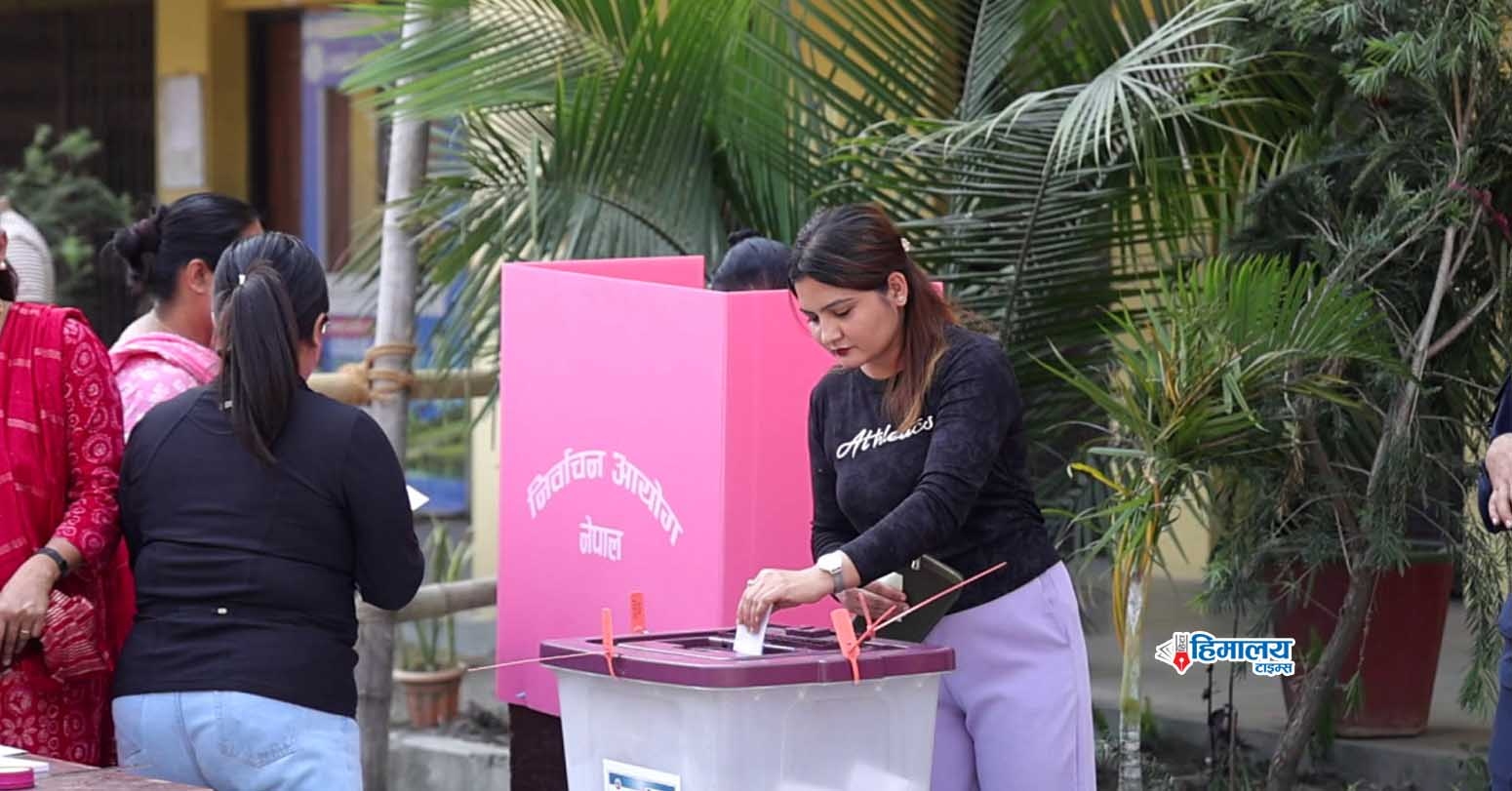
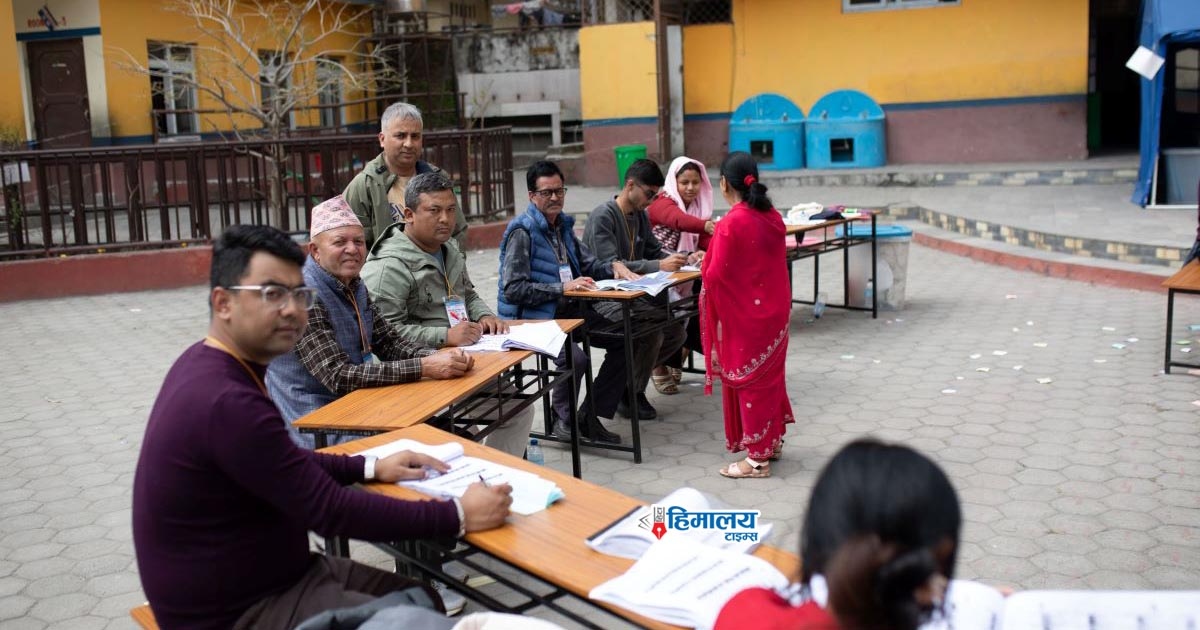

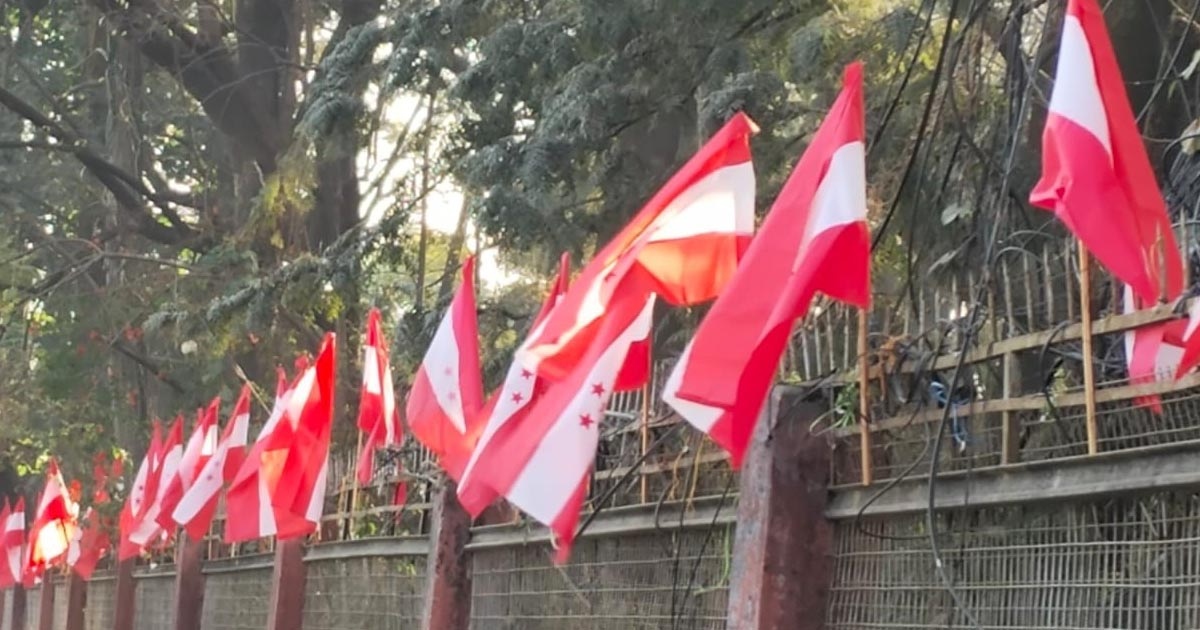
Kathmandu: As the House of Representatives election draws near, the nation finds itself fully immersed in the democratic process. With just one day remaining before polling, voters are traveling back to their hometowns to exercise their right to vote. The polls will be open from 7 a.m. to 5 p.m. on Thursday, and the outcome will shape the country’s political leadership for the next five years. Public enthusiasm and interest are running high. According to the Election Commission, all necessary administrative arrangements have been finalized. A total of 23,112 polling stations have been established nationwide, and 18.9 million voters are eligible to cast their ballots. Security personnel, election staff, and essential materials have already been deployed to their designated locations.
Mass Departure from the Valley
Following the government’s declaration of public holidays from Falgun 20 to 22 for the election, a significant number of people have been leaving the Kathmandu Valley to return to their home districts. With festivals, election holidays, and the weekly break spanning Falgun 18 to 24, traffic has surged, resembling the bustling movement typically seen during Dashain and Tihar.
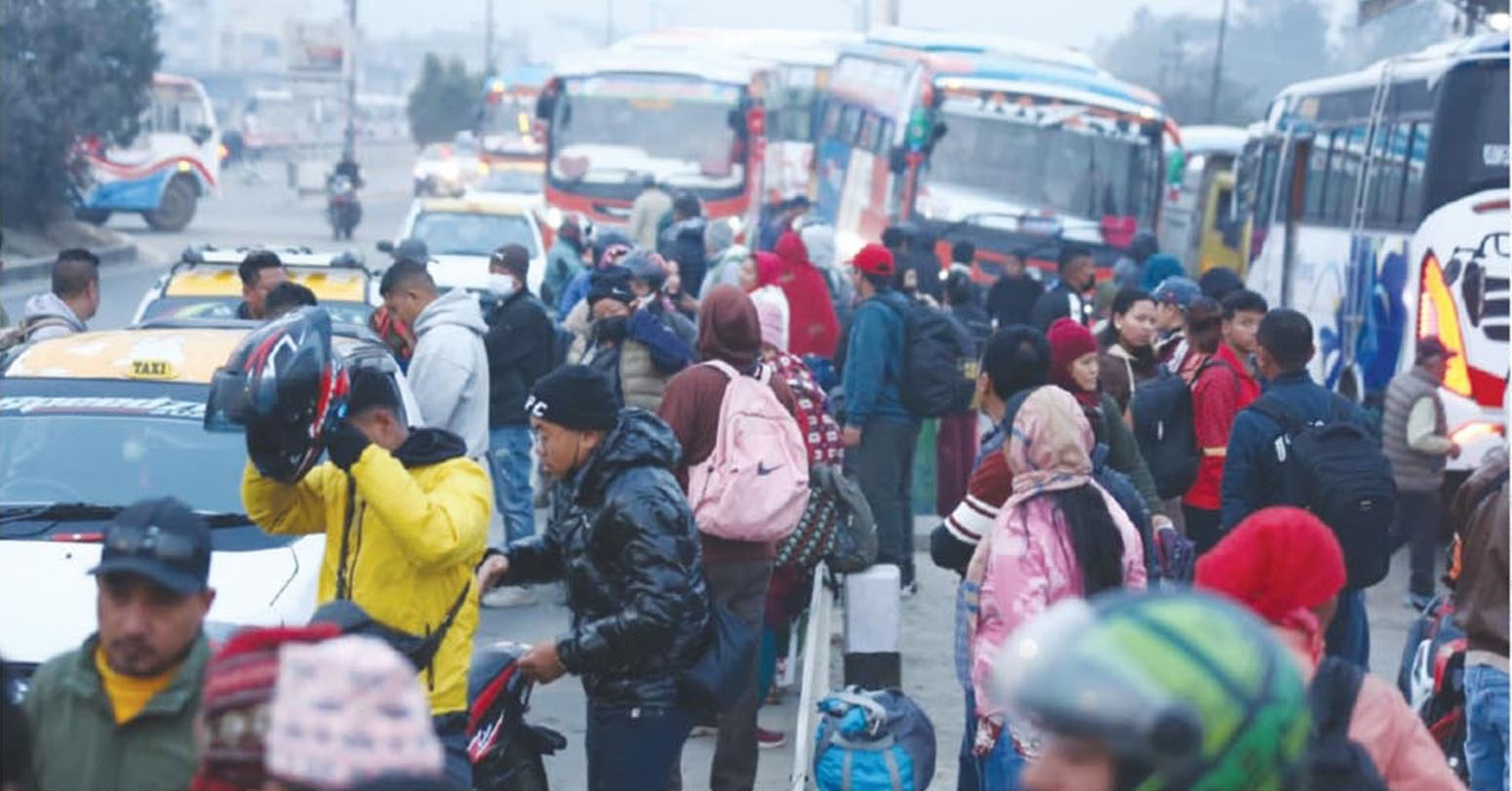
The Kathmandu Valley Traffic Police Office reports that between 25,000 and 30,000 people have been departing the valley daily in recent days. Currently, the number of vehicles and passengers leaving exceeds those entering. Areas such as Gongabu (New Bus Park), Kalanki, Koteshwor, and Balkhu have been crowded with travelers since early morning.
Deputy Superintendent of Police Sunil Jung Shah of the Kathmandu Valley Traffic Police Office stated that more than 750,000 people have left the valley so far. He noted that the outflow is expected to continue until Wednesday. Public transportation is operating at full capacity, while the use of private vehicles has also increased markedly. From last Friday to Tuesday noon alone, the number of people departed by road. The number of those traveling by air and private vehicles are also significant.
Long queues at ticket counters, passengers clutching bags, and individuals making urgent phone calls to secure seats have become common sights at bus parks. Although managing the heavy flow has been challenging, traffic authorities say the situation remains under control. Compared to previous elections, there has been a noticeable decline in the use of vehicles adorned with party flags and banners. This time, many voters are traveling independently in private vehicles, microbuses, and long-distance coaches.
Rising Election Activity in Villages
As the valley gradually empties, rural areas are witnessing a surge in election-related activity. Local markets are lively as people who have spent years in cities for work or study return home. Political discussions are intensifying in tea shops, public squares, and community centers.
With the silence period in effect, candidates have paused their campaigns. Nevertheless, preparations for polling continue at a brisk pace. Local youth are actively involved in cleaning polling centers, volunteering, and spreading awareness. A notable number of travelers are heading toward Sudurpaschim, Karnali, Lumbini, and Madhesh provinces, with long-distance buses operating around the clock.
Heightened Security Measures
Security agencies are on high alert to ensure that voting takes place in a free, fair, and peaceful environment. Movement across border areas adjoining India and China has been restricted from midnight of Falgun 18 to midnight of Falgun 21, with exceptions only for essential services and emergency healthcare.
Nationwide security arrangements have been strengthened through coordination among the Nepal Police, Armed Police Force, Nepal Army, and election security personnel. Special monitoring measures have been implemented at sensitive polling stations.
For many citizens, the election represents a grand festival of democracy. Lachhuram Tharu of Bardiya, preparing to depart from the New Bus Park in Gongabu, expressed this sentiment: “We must go to vote—it is both our right and our duty.” However, the surge in travelers has made securing bus tickets difficult. Some passengers have complained about ticket shortages and increased fares. Fulman Tamang, waiting at the Jadibuti bus park for a ticket to Ramechhap, shared his frustration: “I have been coming here for two days but still haven’t been able to get a ticket. Even when tickets are available, fares have gone up.”
In the valley, shops and businesses have begun to close partially, and attendance in offices has declined. With lighter traffic, the capital appears calm and subdued. In contrast, villages are brimming with anticipation and energy. As ballots are cast, the nation stands at a pivotal moment—one that will define its future direction and renew hopes and expectations for the years ahead.
Middle-aged man spends millions to
Dr. Dharam Raj Upadhyay: Man
Children, Greatest Victims Of Sudan’s
Breathing The Unbreathable Air
Comprehensive Data Protection Law Critically
Gender Differences In Mental Healthcare