












For as long as most Nepalis can remember, luxury meant one of two places. Either you were in Kathmandu, somewhere along Durbar Marg, Kantipath or Lazimpat, where the marble lobbies and doormen have always been. Or you were in Pokhara, watching the sun go down over Phewa Lake from a resort balcony. Everywhere else, if you wanted a proper hotel, you settled for something ordinary: a budget guesthouse, a trekking lodge, or a transit motel near a bus park.
That is no longer true.
Walk through Biratnagar or Bhairahawa today and you will see construction cranes where, a few years ago, there was nothing but open land. Head up into Mustang and you will find a resort that international travel writers are calling one of the best in the world. Nepal now counts 222 star rated hotels nationwide, including 28 five-star properties, according to the Department of Tourism, and crucially, most of that new building is not happening in the two cities everyone assumes. The hospitality industry as a whole now puts more than NPR 326 billion into the national economy every year, and increasingly, that money is being earned outside the Valley, not inside it.
This is not just a tourism story anymore. It is a story about where Nepal's richest business families are choosing to place their biggest bets, and why.
The south is building for trade, not views
Start at the border. Across Koshi, Madhesh and Lumbini provinces, five star hotels are going up in places that have nothing to do with sightseeing. There is no lake, no mountain view, no old palace nearby. What there is, instead, is a customs checkpoint, a trade route into India, or an airport runway.
Take Mechi Crown Plaza in Jhapa It sits near one of the busiest trade points on the eastern border, and its owners are not really betting on tourists. They are betting on traders and businesspeople crossing over from West Bengal, Sikkim and Bihar who need somewhere decent to stay. Down the road in Biratnagar, the story is much the same, as corporate delegations working the industrial belt start demanding hotels that match what they are used to elsewhere.
Further along, in Bhairahawa, Siddhartha Vilasa is rising close to Gautam Buddha International Airport, counting on a mix of religious travelers heading to nearby Lumbini, business visitors and organized tour groups passing through. And in Nepalgunj, the well known Soaltee group has opened Soaltee Westend Premier, proof that even Kathmandu's oldest hospitality names now see the border towns as worth the investment, not just a backup plan.
None of these hotels survive on room bookings alone. They are built to host trade conferences, cross border business summits and large weddings too, the kind of steady, non seasonal income that keeps a hotel full even when tourist numbers dip. In other words, "prime real estate" in Nepal no longer means a plot near a temple or a palace. Increasingly, it means a plot near a customs post.
Why casinos are part of the story
Most tourism reports will not tell you this plainly, but a lot of the border town building only makes financial sense because of gambling.
Building a five star hotel is brutally expensive, around NPR 10 million for every single room, which means a fairly ordinary 100 room hotel can cost over NPR 2 billion before it even opens its doors. Room rent alone rarely covers that kind of investment in a border town. What does cover it, developers have found, is a casino license, and in Nepal, five star status is exactly what is required to legally run one.
That matters because right across the border, in Indian states like Bihar, Uttar Pradesh and West Bengal, gambling is either banned outright or heavily restricted, and alcohol laws are strict in several of them too. For a wealthy family in Patna, Lucknow or Siliguri, the nearest legal alternative used to mean a flight to Goa or an expensive trip to Dubai or Macau. Nepal's border hotels offer something much simpler: a short drive, no flight, no complicated paperwork, just a casino, a five star room, and increasingly, banquet halls built for big Indian weddings too.
It is a blunt strategy, but it works. These hotels are not really competing with other Nepali cities. They are competing with whatever a wealthy Indian family would otherwise do with their weekend, and increasingly, they are winning that competition simply by being closer and easier to reach.
Faith is becoming the next big investment
There is a part of this story that gets far less attention than casinos or mountain resorts, but may end up mattering just as much: pilgrimage.
Kathmandu and Pokhara get all the tourism headlines, but Nepal is full of religious sites that already pull in enormous numbers of devoted visitors every year, often with almost no proper hotel infrastructure to support them. In the far east, Pathibhara, the cliffside temple in Taplejung, has long drawn pilgrims willing to make a punishing multi day journey on foot. Developers now see that same demand as reason enough to invest in helicopter transport and proper wellness lodges nearby, turning a grueling pilgrimage into something a wealthier, older or less able-bodied devotee could actually manage.
On the opposite end of the country, in the far west, Badimalika, a high-altitude alpine shrine, is being talked about as the next major eco pilgrimage destination, a place where developers hope to build comfortable lodges without erasing what makes the site sacred in the first place. Further south, in Pyuthan, Swargadwari already draws heavy, steady crowds of pilgrims from the western hills and from across the Indian border, visiting its eternal flame, yet accommodation there remains basic, which analysts see as a clear sign of untapped demand rather than a lack of interest.
Then there is Dhorpatan, in Baglung and Rukum, Nepal's only hunting reserve and a genuinely unusual case. It draws a tiny number of visitors, almost entirely foreign conservationists and trophy travelers, but each of them can spend tens of thousands of dollars on a single trip. It is a small, strange corner of the tourism economy, but a highly profitable one, and it has barely been developed at all.
What ties Pathibhara, Badimalika, Swargadwari and Dhorpatan together is simple. None of them depend on trekking seasons, border trade cycles or casino regulations. People visit out of devotion or for a once in a lifetime experience, not because of a seasonal package deal, which makes this kind of demand unusually steady and unusually resistant to the shocks that can hit other parts of the tourism economy.
Up in the mountains, it's a different game entirely
While the plains are chasing volume, the mountains are doing the opposite: chasing exclusivity.
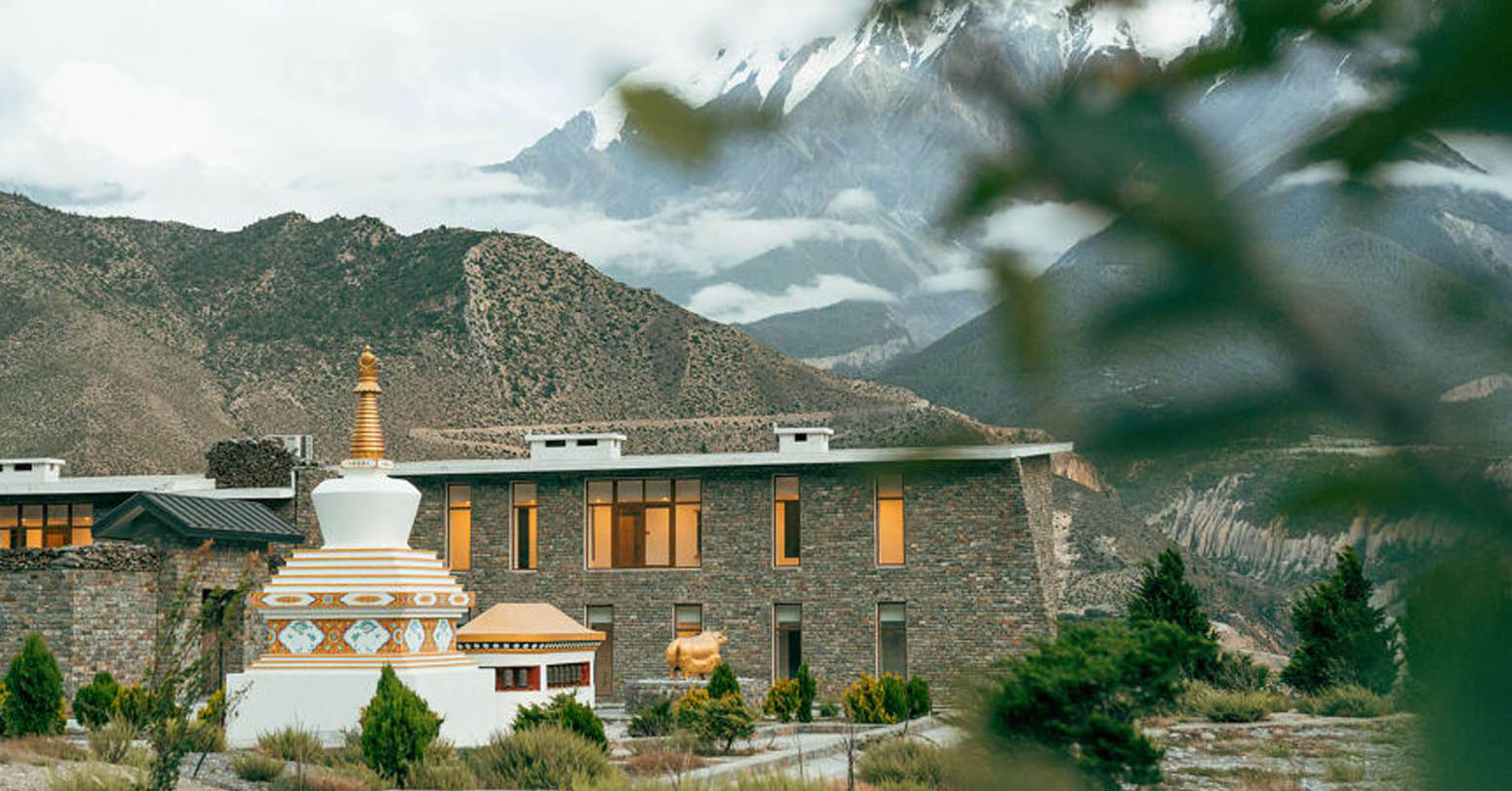
For decades, mountain tourism in Nepal meant budget trekking lodges and high-risk mountaineering expeditions that left a heavy environmental footprint behind for relatively little economic return. Shinta Mani Mustang has flipped that model on its head. It is a small, design heavy resort in the trans Himalayan rain shadow that has picked up international recognition for combining serious luxury with a light environmental footprint, and it charges well over a thousand dollars a night for the privilege.
It does not need hundreds of rooms or heavy footfall to make money. It needs a handful of travelers who see the remoteness itself as the luxury, and it delivers that experience through traditional Himalayan and Tibetan style wellness treatments and food sourced from local high-altitude farms, rather than imported supply chains. Because rooms are few and rates are high, the resort does not need to overload the valley with visitors to stay profitable, which is precisely the point. It is proof that high end tourism does not have to come at the cost of the landscape that makes a place worth visiting.
Put together, Nepal does not have one hospitality strategy right now. It has several running side by side: trade driven hotels in the south, gaming driven hotels along the border, faith driven development around temple towns, and scarcity driven luxury in the mountains. Different customers, different risks, same underlying trend. Money and ambition are moving away from the Valley.
Who's actually paying for all this?
Behind every one of these hotels is a financing arrangement worth understanding, because it explains who is really taking the risk.
International names like Marriott, Hilton and IHG are attached to a lot of these projects, but not in the way most people assume. They are not paying for construction. What they bring is their brand name, their global booking systems and their loyalty programs, Marriott Bonvoy, Hilton Honors, because that is what pulls in international guests and corporate travel budgets. The actual money, the land, the construction loans, all of it comes from Nepali business houses. And once you leave the Valley, even that brand name cover mostly disappears.
Take Mechi Crown in Jhapa. There is no international flag on the building at all. It was built for roughly NPR 1.5 billion by a small group of regional promoters led by Balram Sapkota, and the ownership is still shifting: Sapkota bought out a fellow investor's stake in July 2026 to take majority control. The one outside name involved is Udaan Hotels and Resorts, an Indian group that took over day to day management under a 12 year lease in 2024, a reminder that the management deals reshaping border town hotels increasingly come from across the border in India, not from Marriott or Hilton.
In Bhairahawa, Siddhartha Vilasa tells a similar story. It was built for NPR 2.5 billion entirely out of the pocket of Siddhartha Hospitality Group, a family business that started with a lunch shop in Tikapur 25 years ago. When the group needed fresh capital to keep expanding, it did not turn to a foreign hotel chain, it turned to
Nepal's own stock market, launching an IPO in 2024. Soaltee Westend Premier in Nepalgunj draws on an even older piece of Nepali capital: Soaltee Hotel Limited has traded on the Nepal Stock Exchange since 1993, which means ordinary Nepali shareholders, not just a handful of billionaire families, are quietly funding part of this border town boom.
The bigger picture is straightforward once you see it. In the Valley, foreign brands get the glamour while Nepali families carry the debt. Beyond it, even the glamour is homegrown, financed through family capital, cross-border management leases and, increasingly, Nepal's own stock market.
The good, the risky, and what could go wrong
There is a genuinely positive story buried in all of this. For years, the best hospitality jobs in Nepal existed almost exclusively in Kathmandu and Pokhara, which meant talented young people from Biratnagar, Nepalgunj or Mustang had to leave home, often the country entirely, to the Gulf or Southeast Asia, just to build a career. That is starting to change. A five-star hotel in Jhapa or Bhairahawa needs finance managers, trained chefs and guest relations staff just like one in Kathmandu does, and those jobs are now showing up close to home, which could genuinely help slow the steady drain of young talent out of Nepal's smaller cities and towns.
But it would be dishonest to pretend this boom comes without risk. A lot of these hotels have been built ahead of proven demand. Nobody actually knows yet whether Bhairahawa or Nepalgunj can consistently fill a five-star hotel through the off season, and a prolonged stretch of low occupancy could easily trigger price wars that squeeze everyone's margins. Banks have lent heavily to the families building these properties, so if that demand does not show up as expected, or if India tightens its gaming or travel rules, some of that debt could turn into a real problem for Nepal's banking sector as a whole.
None of it works without decent infrastructure, either. Roads that do not fall apart in the monsoon, airports that run on schedule, power that does not cut out. These remain the biggest threat to the entire plan, especially in provinces where that infrastructure has never had to support this kind of investment before. And developers will increasingly need to navigate a more vocal public, including growing Gen Z activism around land use and the kind of political friction over resource allocation that tends to surface around election cycles.
Still, the direction of travel looks settled. Nepal's five-star money has left the Valley, and there is little sign of it going back. What happens over the next ten years, whether the roads get built, whether the pilgrim sites get their fair share of investment, whether the border hotels can weather a downturn, will say a lot about how much of Nepal actually gets to share in this boom, and how much stays concentrated in the hands of a few very large business families.
Janai Purnmina Being Marked Today
Catastrophic Flash Flood In Bhotekoshi
Water Level Again Increases In
Forgiveness Ritual Held At Palanchowk
Bhotekoshi Flashflood: Rs 1.91 Billion
Rasuwa’s Road Connection Restored