


















Menstruation is a natural biological process in which the uterus sheds its lining, resulting in blood and tissue flowing from the vagina. It typically occurs once a month in females from puberty (around ages 10–14) until menopause (around age 45–55) and forms a key part of the reproductive cycle. Despite its natural and essential role in reproductive health, menstruation is often shrouded in stigma, taboos, and cultural misconceptions—especially in parts of South Asia.
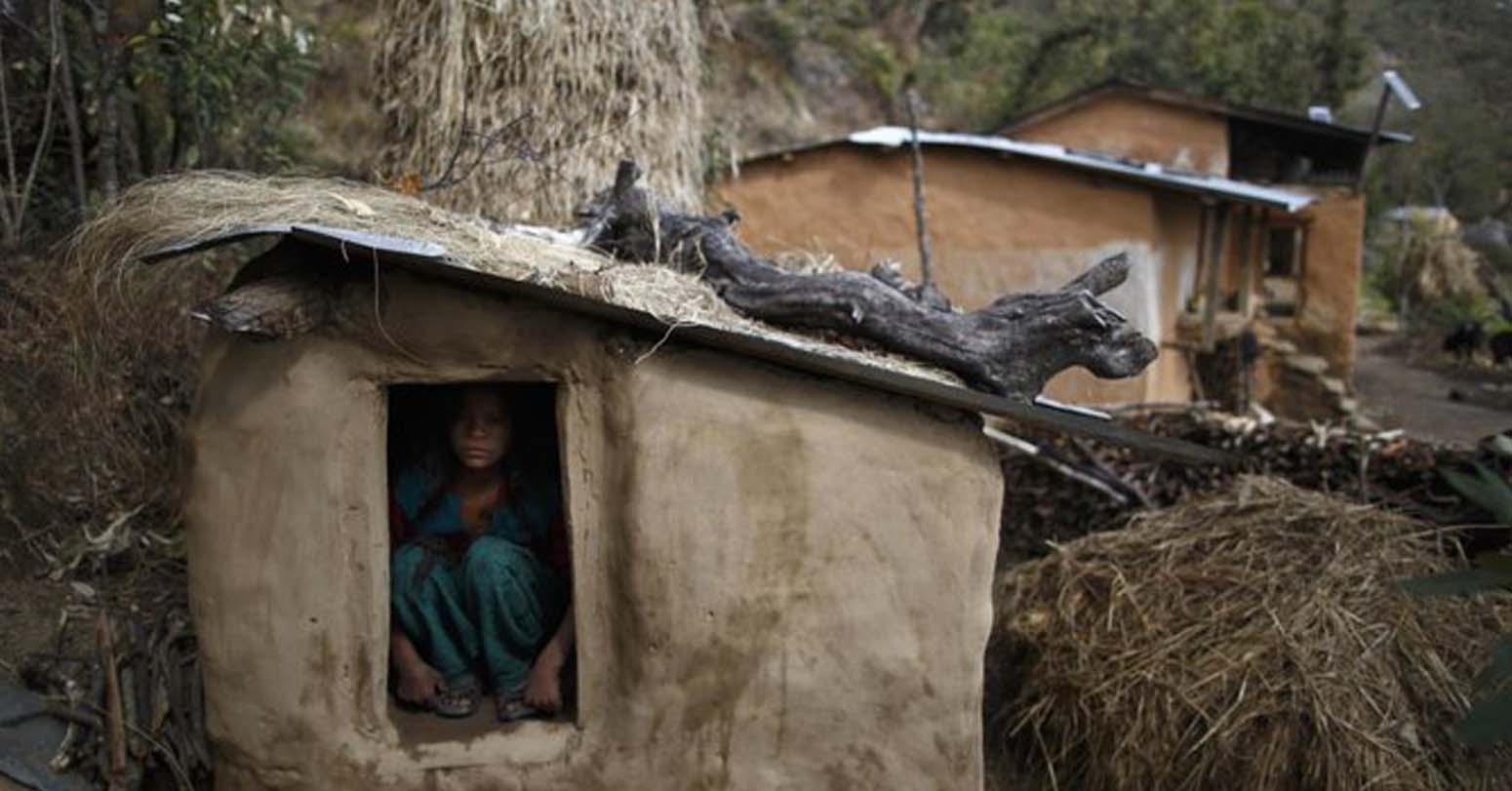
One of the most extreme manifestations of such stigma is Chhaupadi, a deeply rooted cultural practice still prevalent in certain regions of western Nepal, particularly in districts like Achham, Bajura, and Doti. Under this tradition, menstruating women and girls are deemed impure and are forced to live in isolation—often in unsafe huts or sheds—during their menstrual cycle. The term Chhaupadi originates from the local dialect, meaning “untouchable being,” and reflects the entrenched discrimination and social exclusion that menstruating individuals endure. This harmful practice not only violates basic human rights and dignity but also poses serious health and safety risks.
Nepal’s Constitution also provides protection under Fundamental Rights against discrimination and degrading conduct. The Constitution of Nepal 2072, Article 38(3) states: “No woman shall be subjected to physical, mental, sexual, psychological or other form of violence or exploitation on the grounds of religion, social, cultural tradition, practice or any other grounds, and such an act shall be punishable by law.”
As a party to nine principal international human rights treaties, including those under the auspices of the United Nations, Nepal is obligated to enact and enforce laws against discriminatory and humiliating behavior. Similarly, Nepal’s Constitution also provides protection under Fundamental Rights against discrimination and degrading conduct. The Constitution of Nepal 2072, Article 38(3) states: “No woman shall be subjected to physical, mental, sexual, psychological or other form of violence or exploitation on the grounds of religion, social, cultural tradition, practice or any other grounds, and such an act shall be punishable by law.” In this context, in BS 2062 in the case of Raj Kumar K.C. & Others v. Government of Nepal, Ministry of Women, Children and Social Welfare & Others, the Supreme Court ruled that Chhaupadi, a practice where women are secluded during menstruation, should be declared a social taboo and directed the government to raise awareness against it. The court also ordered the government to form directives within three months to execute this order. However, it was only when social, cultural, moral, and awareness-raising measures proved ineffective that Chhaupadi was criminalized under the Muluki Criminal Code, 2074, section 168(3), with a penalty of up to three months’ imprisonment or a fine of up to NPR 3,000, or both.
According to liberal criminological theory, the first priority in controlling harmful behaviors should be moral, religious, cultural, and development-oriented measures, and the law should be used only as a last resort. Nevertheless, in a country like Nepal—where legal enforcement is weak and even judges are unaware of many existing laws—serious doubts arise whether legal measures can truly serve as that last weapon. In this view, if Chhaupadi was criminalized through law only after sufficient social, cultural, and awareness-based models were applied, then and only then can the law be considered a legitimate final tool. But since in most districts there have been no cases registered, even though the practice is still prominently observed—owing to weak enforcement and lack of support from local authorities and society—the law has not succeeded in becoming an effective “last resort.”
Although Chhaupadi was officially criminalized in Baisakh 2062 BS (April 2005), when the Government of Nepal declared it an "evil custom" and issued a directive for its eradication, the practice still persists in many parts of the country, particularly in the western regions. On-the-ground realities reveal that Chhaupadi remains deeply entrenched in social norms, despite its illegality.
According to data from the District Police Office, since 2006, more than 15 women and girls have died in chhau sheds in Achham, a hill district in Sudurpaschim Province. Similarly, two deaths have been reported in Doti and three in Bajura under comparable circumstances. Chhaupadi is a harmful traditional practice with deep consequences on women’s health, education, dignity, and rights. Eliminating it requires community education, legal enforcement, awareness campaigns, and empowerment of women and girls.
One notable incident occurred in 2020, when Parbati Budha Rawat, a 20-year-old woman from Siddheshwari in Ward No. 3 of Sanphebagar Municipality, Achham, died due to asphyxiation from a woodfire she had lit to keep warm while sleeping in a chhau shed. In another case reported in July 2024, a 16-year-old girl was allegedly raped in a chhaugoth (menstrual shed) in Ward No. 2 of Panchadewal Binayak Municipality, Achham. Likewise, in Krishnapur, Kanchanpur, 28-year-old Kamala Aauji Damai was bitten by a snake while sleeping in a menstrual hut located just meters away from her home. These are only a few documented cases; in reality, thousands of such incidents remain unreported and undocumented due to fear, stigma, and societal normalization of this harmful practice.
Educators and activists working in these regions face immense challenges due to the lack of basic infrastructure and community resistance rooted in religious beliefs. Social change in these underprivileged, remote areas remains slow, and inherited habits continue to dominate daily life, even as legal and human rights frameworks evolve elsewhere in the country.
Discriminatory practices like Chhaupadi remain prevalent in Nepal even though it was outlawed in 2005. This is because the cultural traditions associate it with deep rituals. Menarche is viewed as a curse or punishment from a deity, which gives the impression of divine wrath that can bring misfortune to the community. Additionally, there are systemic barriers—law-enforcing officers often lack adequate resources, police stations are underfunded, and few cases are ever registered. The lack of education, especially in the far-western regions, contributes to a society disconnected from modern understandings of gender equality and health rights. Educators and activists working in these regions face immense challenges due to the lack of basic infrastructure and community resistance rooted in religious beliefs. Social change in these underprivileged, remote areas remains slow, and inherited habits continue to dominate daily life, even as legal and human rights frameworks evolve elsewhere in the country. The Chhaupadi goth system can be addressed through a combination of community education, legal enforcement, and empowerment of women and girls. Raising awareness about menstruation as a natural process, especially among men and elders, is key to breaking cultural taboos. Schools should provide menstrual education and proper facilities, while grassroots women's groups can offer peer support. Stronger enforcement of existing laws, along with safe reporting mechanisms, is crucial to protect those who resist the practice. Additionally, involving religious leaders in promoting alternative, respectful rites and improving women’s access to economic opportunities can help shift deeply rooted beliefs and end the practice sustainably.
The world has traveled far from where it once was through the development of modern information technology and science, the world has transformed its very shape even today, we are still compelled to raise our voices repeatedly against superstitions and harmful traditions . Even today, society continues to nurture harmful traditions based on religion and culture, even now, one such harmful custom still persists and that is chhaupadi. Chhaupadi is not merely a cultural tradition; it is a violation of human rights, dignity, and equality.
Despite Nepal’s legal measures and policy directives, the practice continues to claim lives and endanger thousands of women and girls. A stronger, community-centered approach that blends education, legal enforcement, and cultural reform is urgently needed. Only when society collectively denounces this harmful tradition can real change take root—and only then can Nepal truly claim to uphold the rights and dignity of all its citizens. The continued prevalence of Chhaupadi underscores a critical gap between law and practice, calling for more effective enforcement, community-level interventions, and robust awareness campaigns to safeguard the rights and dignity of women and girls in Nepal.
Narayani Hospital Doctors Resign En
Guideline Issued To Bring Uniformity
Nepal’s Power Export Earnings Hit
Extreme Weather In Europe Underscores
Israel’s Christians Rely On Faith
Lionel Messi Once Held Baby