















By Satya Raj Joshi
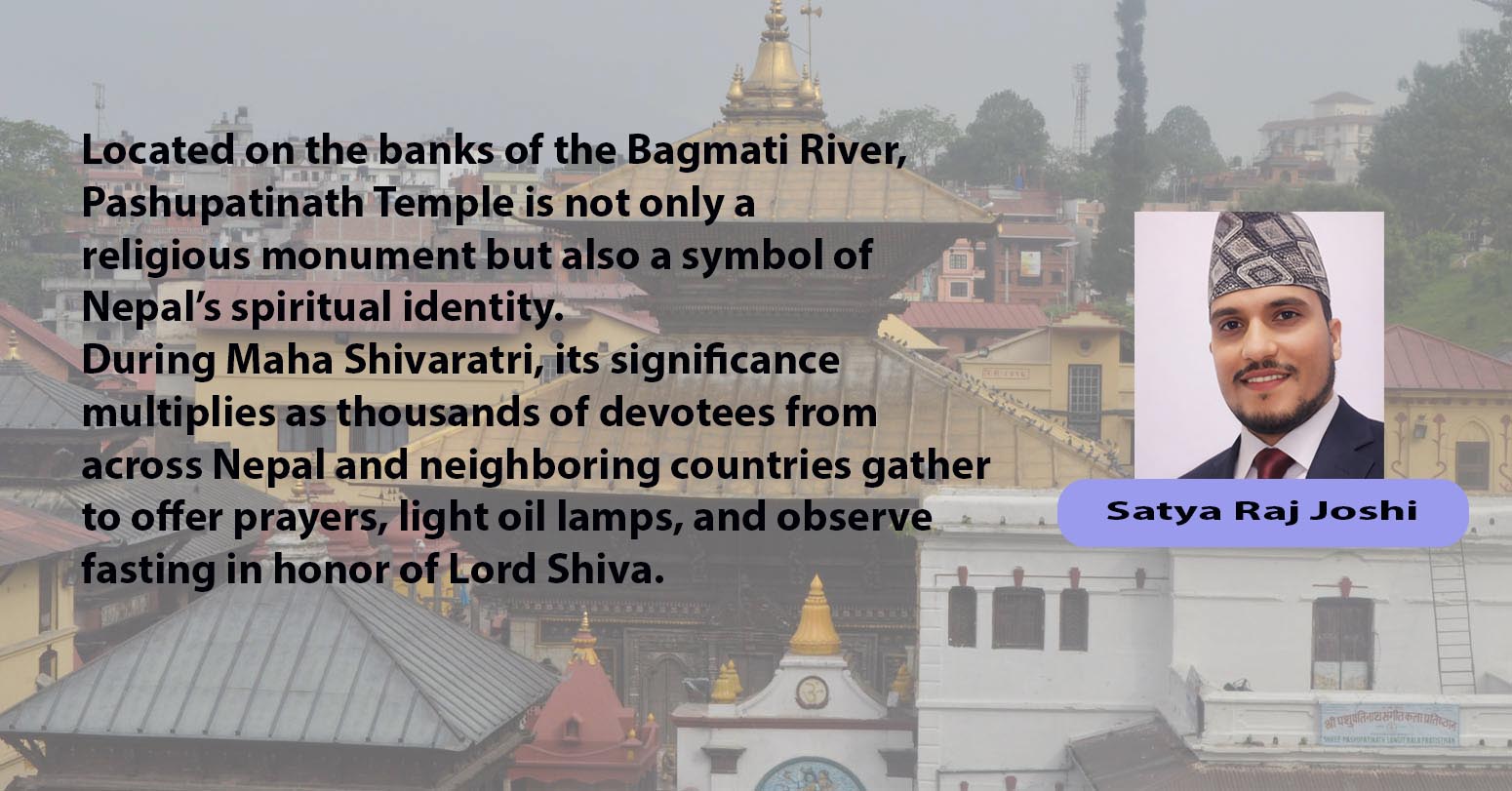
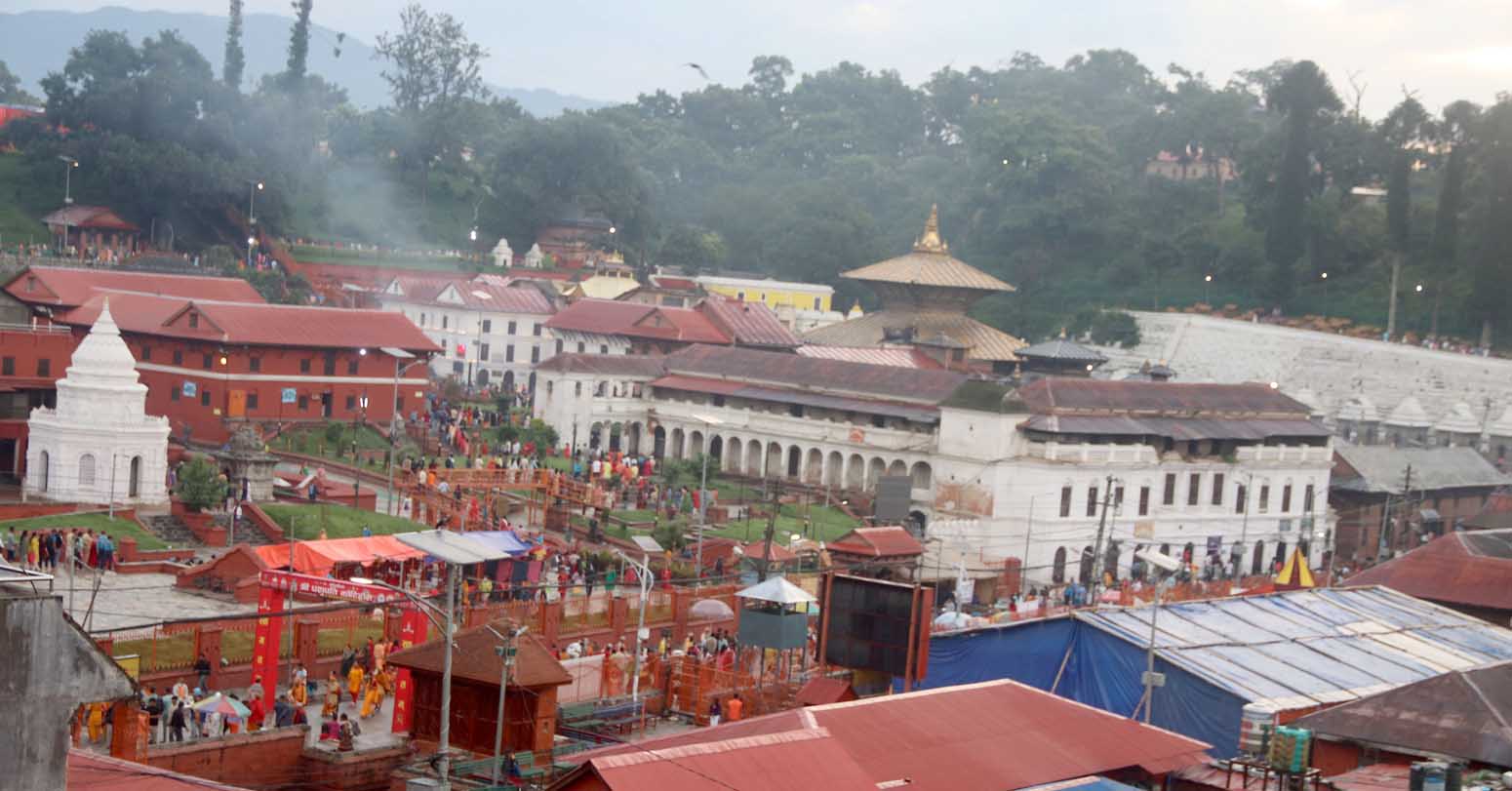
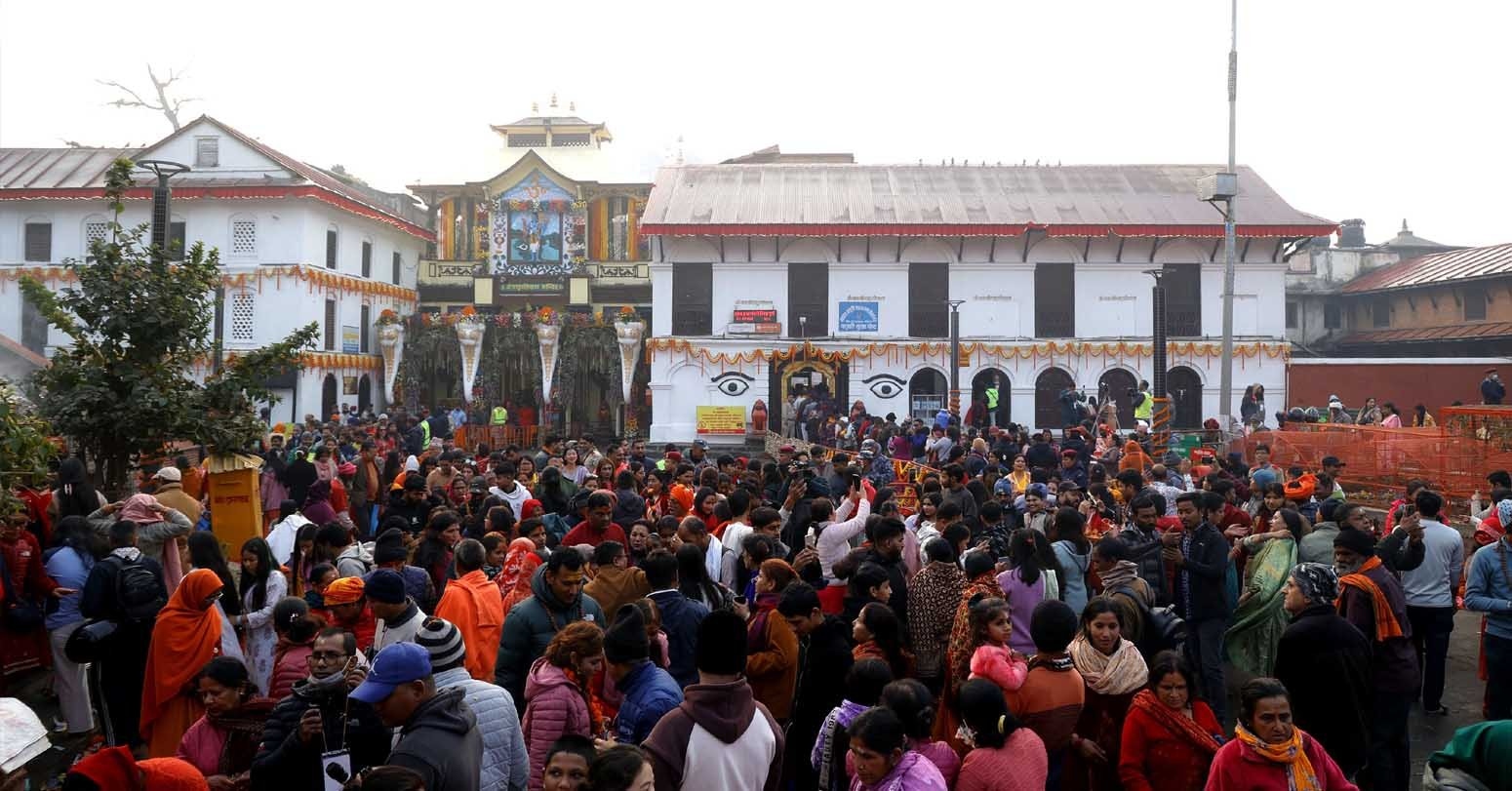
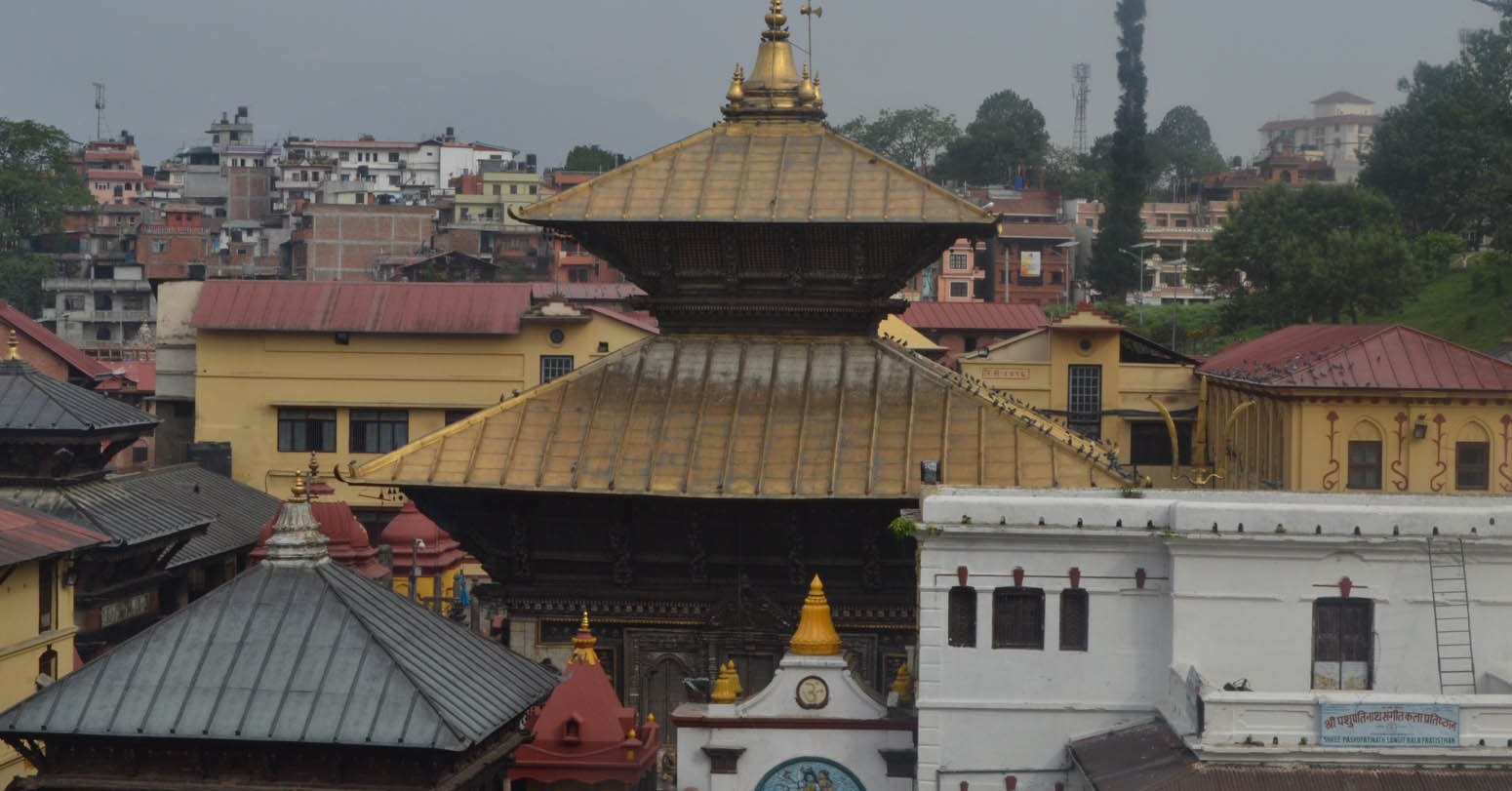
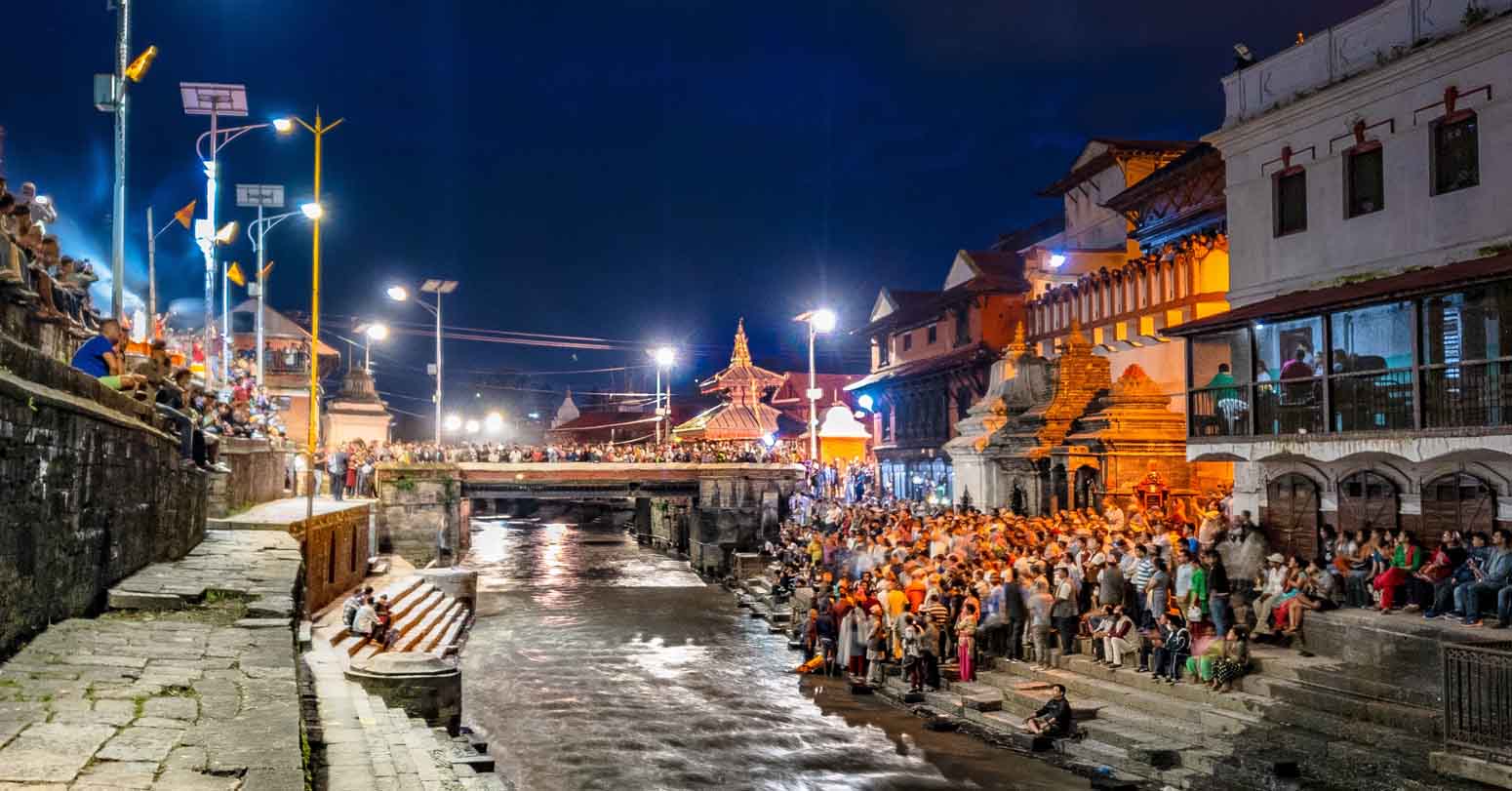
Every year, as the sacred night of Maha Shivaratri approaches, the spiritual heart of Nepal begins to beat more intensely at Pashupatinath Temple. Revered as one of the holiest shrines of Lord Shiva in the world, the temple transforms into a vibrant center of devotion, faith, and cultural unity during this grand festival. Located on the banks of the Bagmati River, Pashupatinath Temple is not only a religious monument but also a symbol of Nepal’s spiritual identity. During Maha Shivaratri, its significance multiplies as thousands of devotees from across Nepal and neighboring countries gather to offer prayers, light oil lamps, and observe fasting in honor of Lord Shiva.
Covered in ash and dressed in saffron robes, they perform meditation and spiritual practices, becoming a major attraction for visitors and photographers alike.
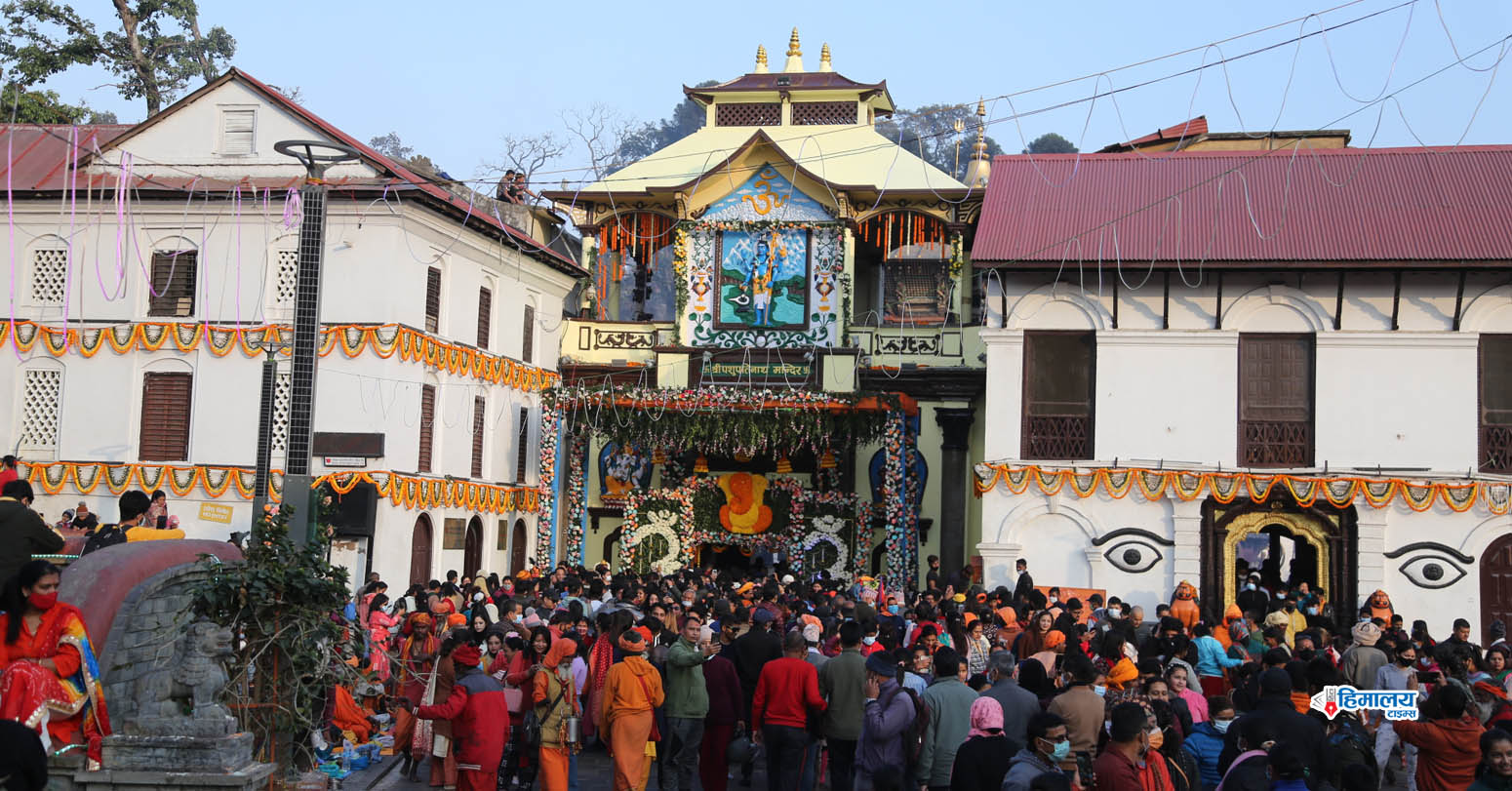
On Maha Shivaratri, the temple complex remains open throughout the night, allowing devotees to perform special rituals and worship. Long queues of pilgrims line the temple premises from early morning. Chanting of “Om Namah Shivaya” echoes in the air, creating an atmosphere of deep spiritual energy. Many devotees observe a strict fast and remain awake all night, believing that sincere prayers on this night bring blessings, peace, and liberation from sins. Sadhus and ascetics, many of whom travel from India and different parts of Nepal, gather at the temple, adding color and mysticism to the celebration. Covered in ash and dressed in saffron robes, they perform meditation and spiritual practices, becoming a major attraction for visitors and photographers alike.
Traditional music, devotional songs (bhajans), and religious discourses are organized within the temple premises.
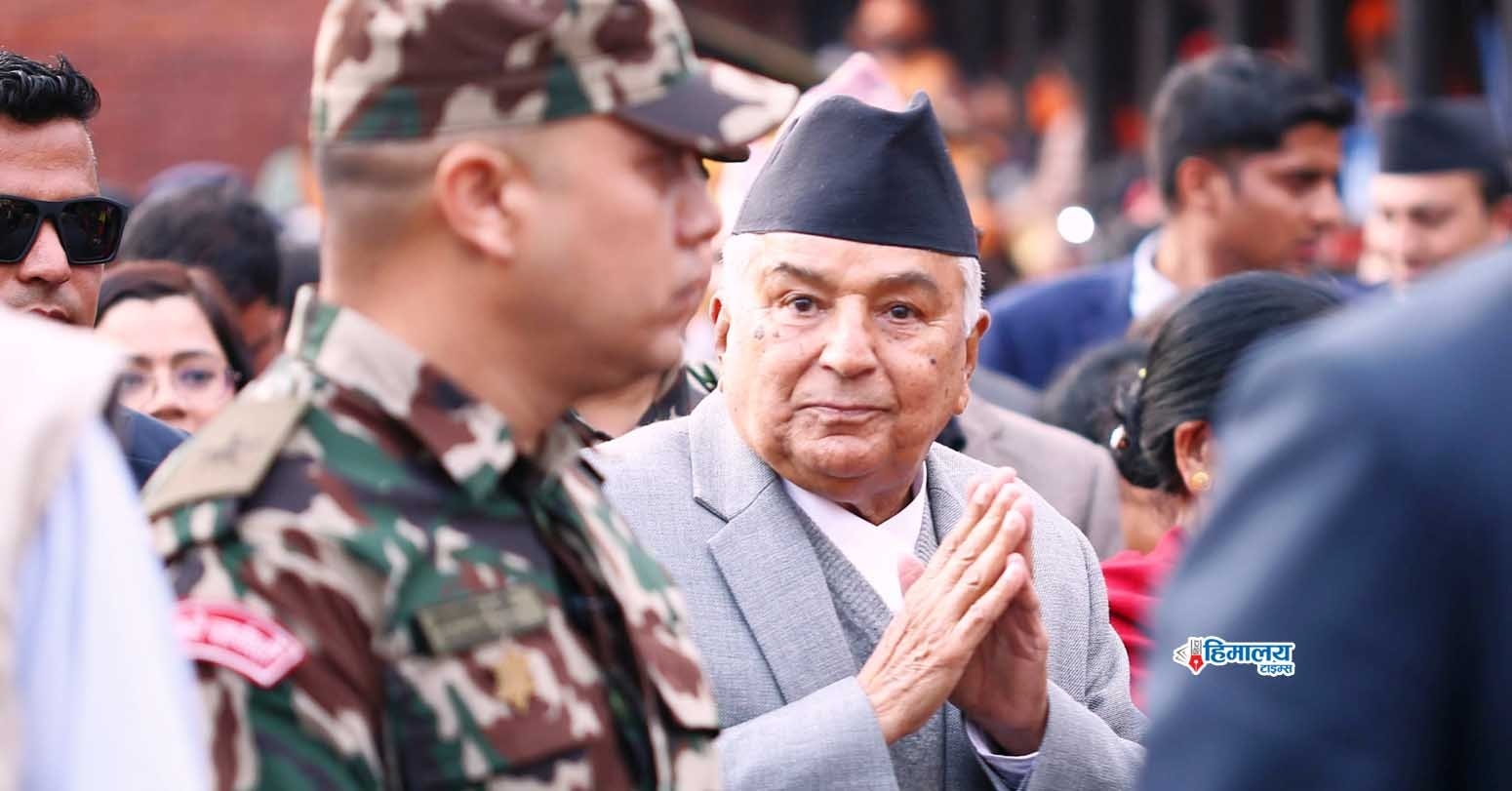
The role of Pashupatinath Temple during Maha Shivaratri goes beyond religious rituals. It becomes a national stage reflecting Nepal’s rich cultural heritage. Traditional music, devotional songs (bhajans), and religious discourses are organized within the temple premises. The festival fosters unity among people of different communities, reinforcing social harmony and shared faith. The government declares a public holiday on this occasion, and security arrangements are strengthened to manage the massive crowd. Volunteers and authorities work together to maintain order, distribute drinking water, and ensure smooth darshan (holy viewing).
Maha Shivaratri also contributes significantly to religious tourism. Hotels, local shops, and vendors around the temple witness increased business. The festival showcases Nepal as a major spiritual destination in South Asia, drawing international attention to its religious heritage.As darkness falls, the temple complex glows with thousands of oil lamps and electric lights. The continuous ringing of bells and the fragrance of incense fill the air. Devotees believe that staying awake and worshiping Lord Shiva on this sacred night symbolizes victory over ignorance and darkness. In essence, during Maha Shivaratri, Pashupatinath Temple stands not merely as a place of worship but as a living embodiment of Nepal’s devotion, tradition, and spiritual strength. It is a night when faith unites the nation and reaffirms the enduring power of belief in shaping cultural identity.
Middle-aged man spends millions to
Dr. Dharam Raj Upadhyay: Man
Children, Greatest Victims Of Sudan’s
Breathing The Unbreathable Air
Comprehensive Data Protection Law Critically
Gender Differences In Mental Healthcare