










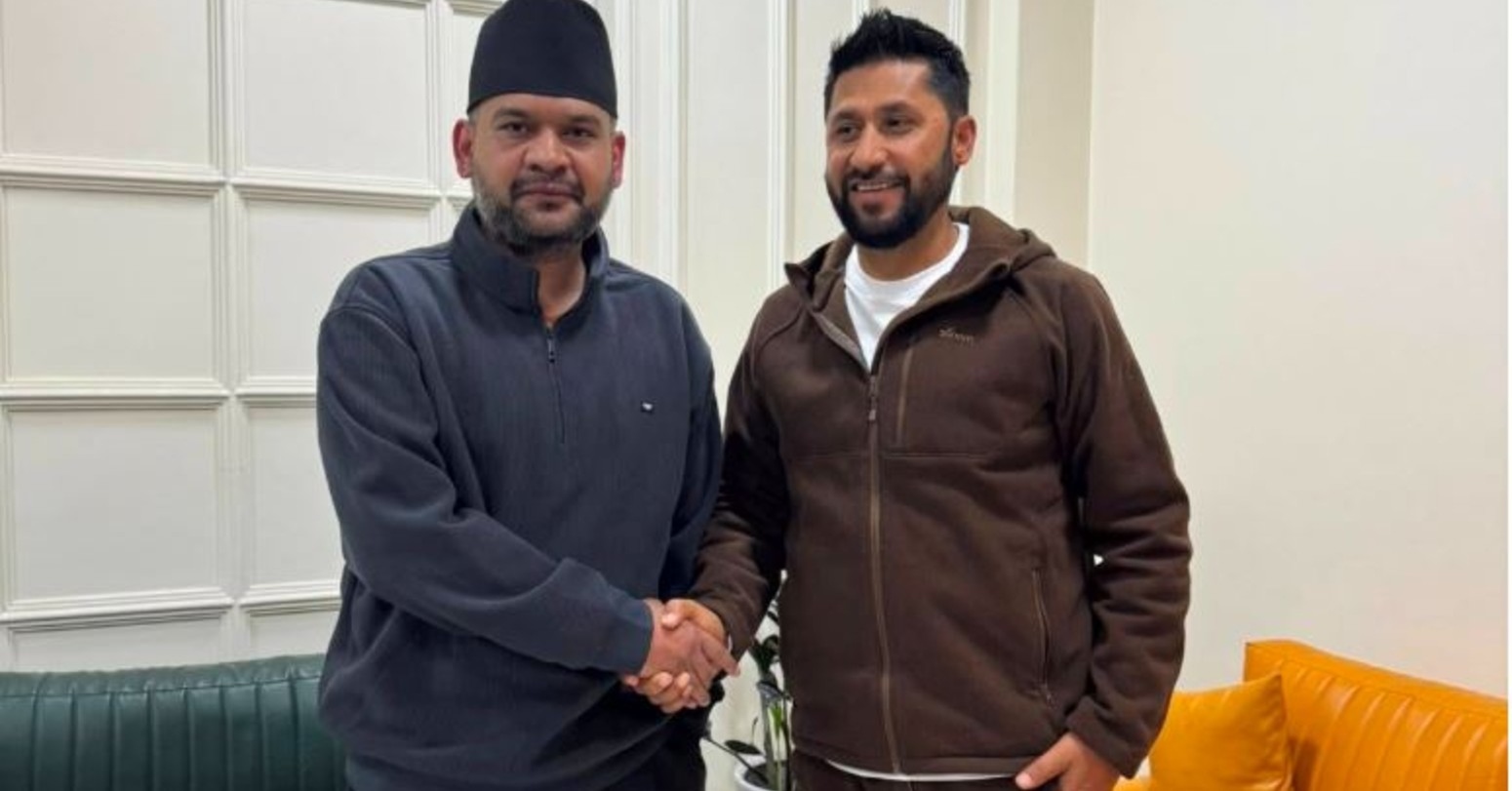


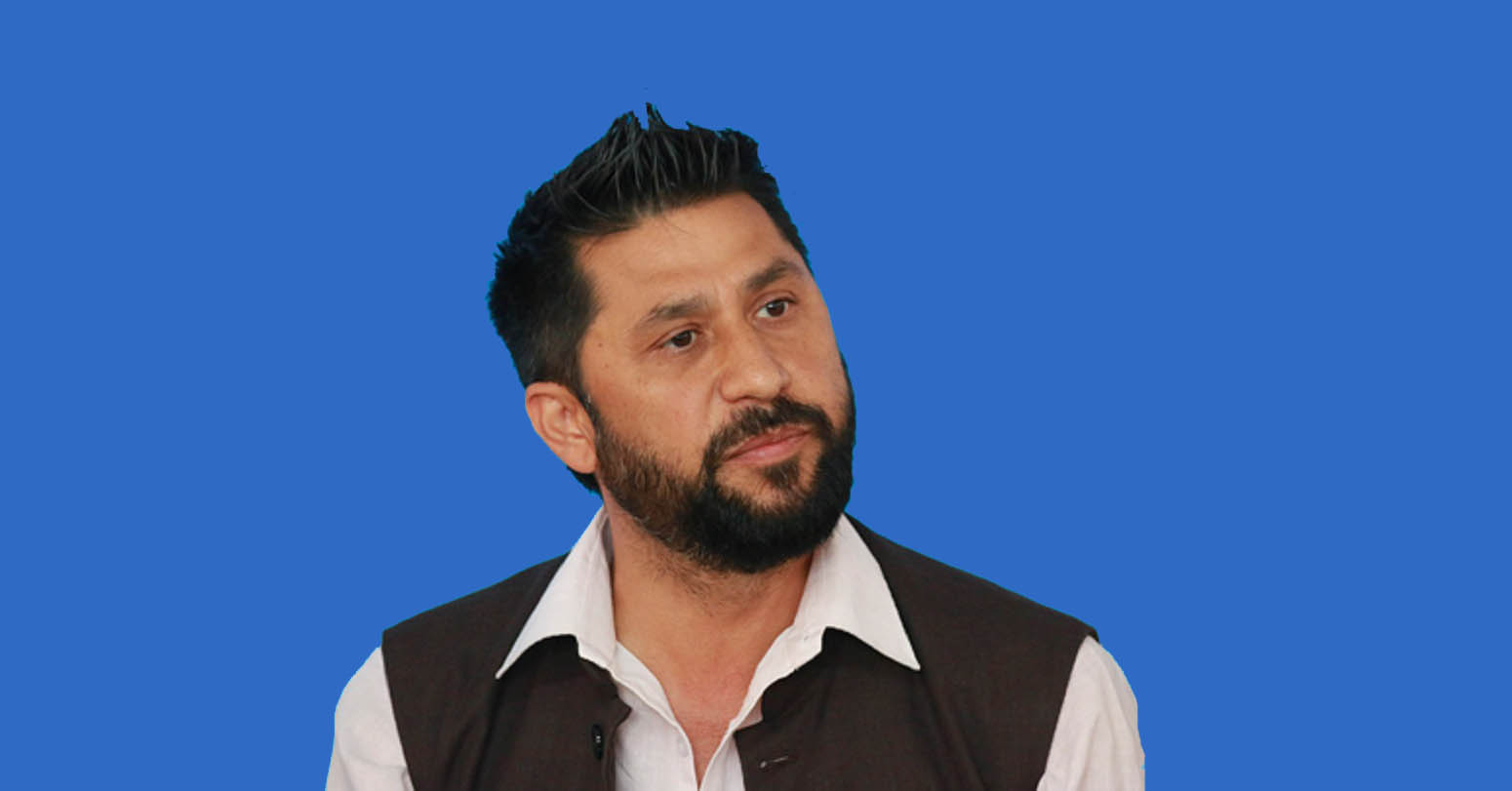

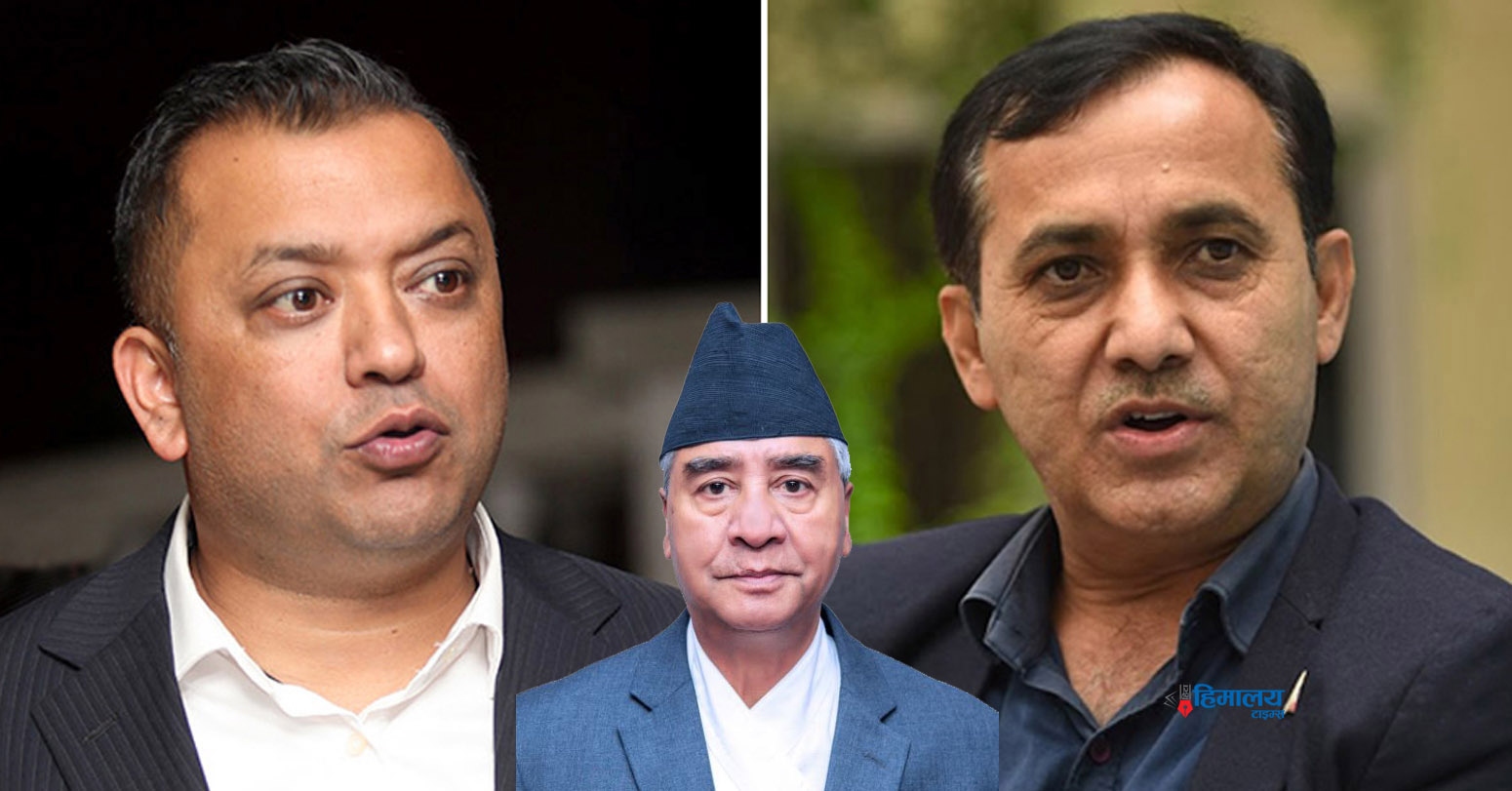


Kathmandu, Dec 30: The accord between Chairman of the Rastriya Swatantra Party (RSP), Rabi Lamichhane, and Mayor of Kathmandu Metropolitan City (KMC), Balendra Shah, on Sunday spread a political sensation, resulting in a raft of analyses.
The TV presenter-turned politician, Lamichhane, and popular rapper-turned local government's representative, Balendra (Balen), were making homework for some days for unity. There is no denying that the Sept 8-9 Gen Z movement brought them together.
Lamichhane's release on bail facilitated in intensifying the talks, finalizing the agreement which aims to topple incumbency. Now, RSP is going on election projecting Balen as the next Prime Minister.
Reading between the lines of the seven-point agreement has begun from various angles- national system, economy, stability and political culture. The coming together of alternative forces counts much though there are only two full months left for voting.
Cautious optimism
A flurry of both euphoria and disapproval are pouring in, while observers call for cautious optimism. At a time when the country is preparing to hold the House of Representatives (HoR) election coming March 5, the agreement will undoubtedly give an impetus to the election atmosphere and exert pressure on the parties with legacy like the Nepali Congress, the CPN UML and the NCP and other fringe ones to mend their ways, reflecting in political decisions and behaviour.
Some most common features Balen and Rabi share are- their advocacy of anti-incumbency, rise to prominence through digital presence and unrelenting campaign, and sheer ambition to reign. They have blamed the established parties of ignoring good governance and failing service delivery.
Although Rabi Lamichhane has already faced elections and got popular votes with anti-incumbency and reactionary slogans, Balen has no political organization and base. This may be the reason for Balen to get merged with Rabi-led party, RSP, believing that it would help him secure a comfortable victory. Similarly, RSP, which had faced much criticism, especially due to release of Lamichhane from Nakkhu jail by his followers during the Gen Z movement of September 8-9, was lured by Balen's popularity.
Cautious optimism
In response to a query put forth by the Rastriya Samachar Samiti (RSS) on the ongoing political development, including the Rabi-Balen agreement, a sociologist and researcher, Pranab Kharel, terms it a togetherness of charismatic leaders, which can blunt the established parties. However, voting in the election would give a clear picture how national politics and affairs will unfold, he added. Kharel stresses cautious optimism over this agreement.
Kharel further commented, “The Rabi-Balen agreement was also a need for their political survival in the wake of the Gen Z movement that created sheer suspicion over their roles.”
As Kharel stated these leaders built their charismatic personalities through media, the digital media in particular of late, which have far more reaches than that of the parties with legacy like the Nepali Congress and the CPN UML. Is it because the NC and the UML are facing their bases fast eroding or their digital mobilizations too ineffective and followers ditching them on digital spheres? It also warrants attention.
Point no1 of the seven-point agreement has owned up Gen Z movement launched against corruption and bad governance. This statement has made clear their stand towards the movement, which Kharel also underlined.
Moreover, political analyst CD Bhatta shared with RSS, "The agreement made between new forces at a time when the NC and the UML, 'the resident political parties', have failed to ensure internal democracy and transformation irrespective of much demand, would certainly bring a wave against the NC and the UML and take advantage of their weakness."
As Bhatta argued, UML Chairman KP Oli has consolidated his power in the party through the recent 11th National Congress, while the largest and oldest democratic party, NC, has not budged from its influence of President Sher Bahdur Deuba. It is not certain NC holds its general convention before election.
However, in Bhatta’s argument, the Rabi-Balen agreement is focused more on power-sharing: who to hold which post. “It therefore lacks connection to people, to which the conscious people may not welcome. Although they are intending to cash in the public disenchantment, the agreement is likely to create confusion," Bhatta reminded.
He further warned if the political polarization between the establishment parties and the new ones continues, the political instability would worsen to political conflict. "We are in a phase to consolidate democracy and the achievements we've made so far, but the agreement does not focus on it. Elevation of people's livelihood is not prioritized, but power sharing," he worried, adding that it would not contribute positively to the system in long run.
Ripple or urgency felt?
Whether it is the immediate impact of the agreement or the urgency felt by the legacy parties for correction that got a boost after agreement, the Nepali Communist Party (NCP) has decided to incorporate youths under the proportional representation of coming HoR election. The NCP officially decided not to include the names of the leaders, who already became lawmakers and ministers, in the proportional representation list of the HoR.
Similarly, the Nepali Congress and the UML are saying that they would forward more youth faces in the coming election.
The Madhes-centric political parties- the Janata Samajbadi Party Nepal and the Janata Samajbadi Party have been unified. Leaders Upendra Yadav and Renu Yadav signed a unification bid from their respective sides today. Earlier on Sunday, an understanding for the unification was reached between the Tarai Madhes Loktantrik Party and Janata Samajbadi Party Nepal as well.
After the Gen Z movement, the NCP has become a unified party, having three former Prime Ministers- Pushpa Kamal Dahal ‘Prachanda’, Madhav Kumar Nepal and Jhalanath Khanal.
Consolidate democracy, make election success
Traditional or new ones, the political parties’ role comes at top in consolidating democracy. They have no luxury at all to slide back from the achievements made so far. The NC, the UML and the NCP, which bear historic roles with experiences of navigating multiple adversities in national politics on the one hand and the new ones like RSP have no option but to work in tandem for national developments irrespective of the race and alliances they make for the coming HoR election. For now, the Rabi-Balen agreement can serve both as a wake-up call for the parties with legacy and an impetus to the election preparation. It is high time to make election a success.
Middle-aged man spends millions to
Dr. Dharam Raj Upadhyay: Man
Children, Greatest Victims Of Sudan’s
Breathing The Unbreathable Air
Comprehensive Data Protection Law Critically
Gender Differences In Mental Healthcare