













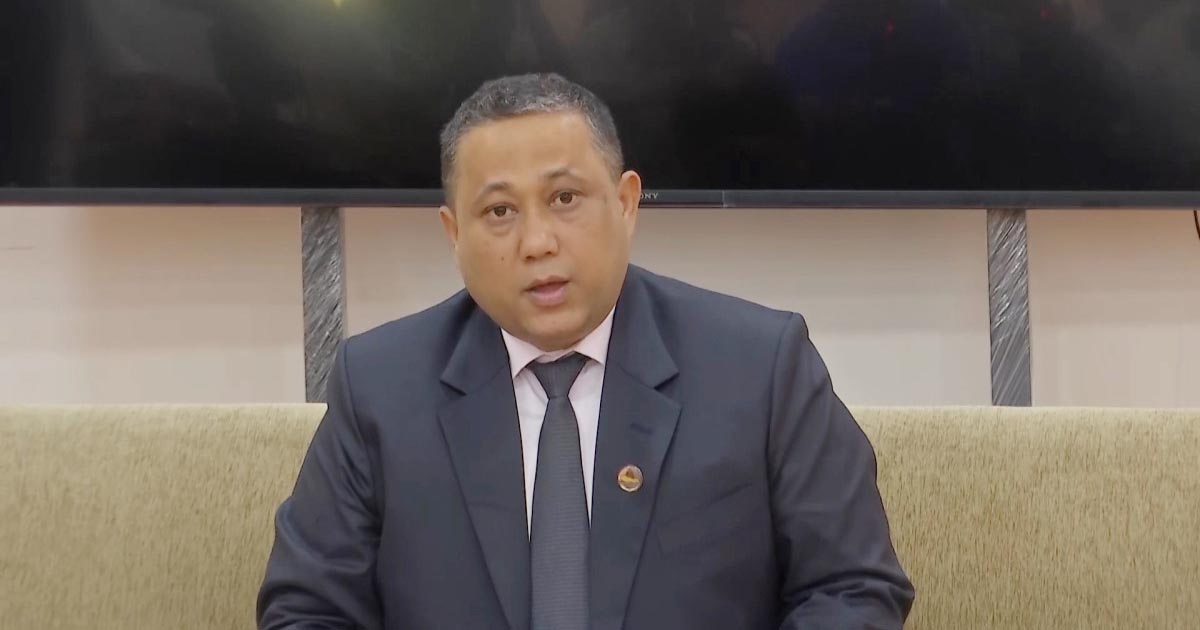


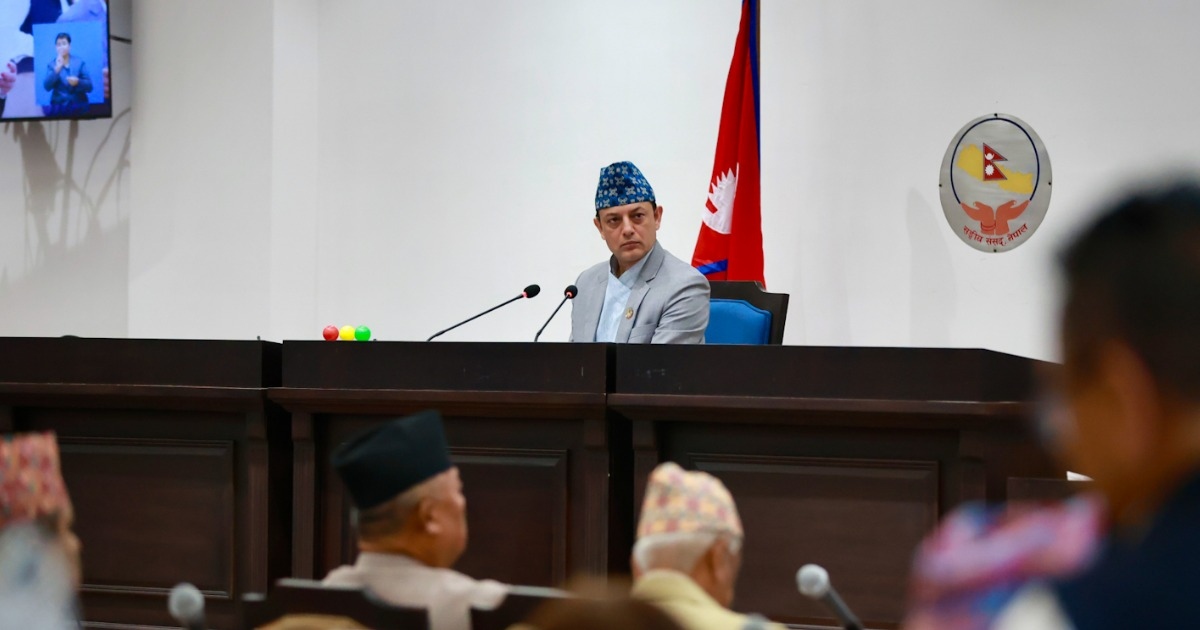


Kathmandu, Oct 4: Resham Lal Chaudhary, founder of the Nagarik Unmukti Party, has raised concerns over the continued marginalisation of the Tharu community, questioning why its religious and cultural identity and representation in state institutions remain unresolved despite the establishment of the republic.
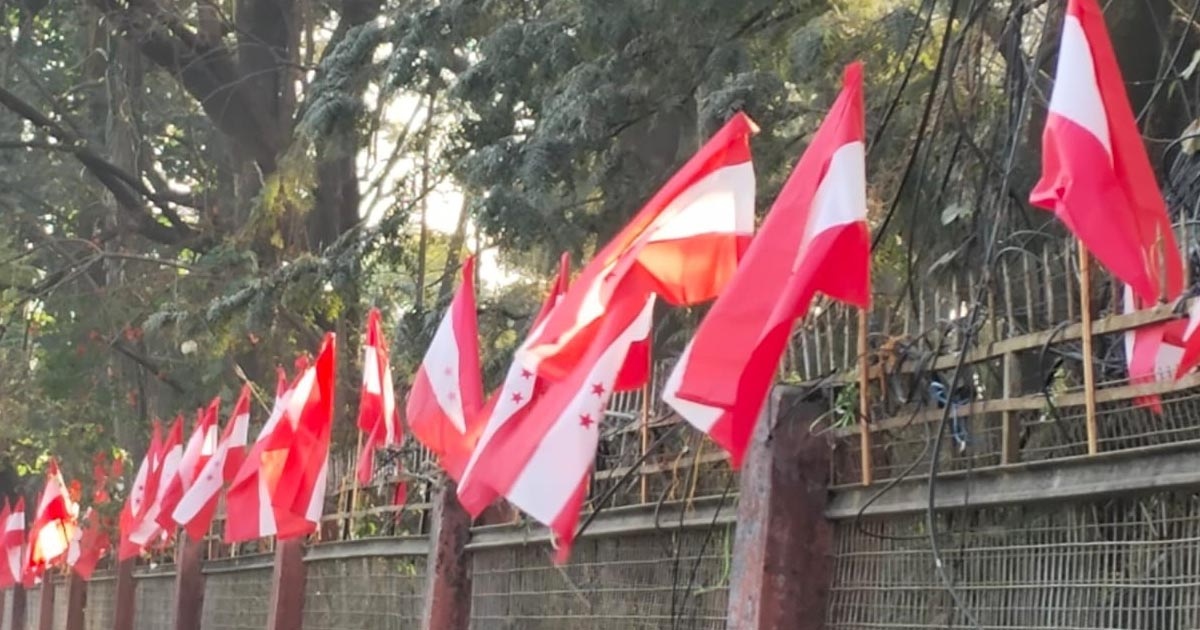
Addressing the inaugural ceremony of the Nepali Congress’s 15th General Convention at Khulamanch in Kathmandu on Sunday, Chaudhary said that although the Constitution guarantees rights to citizens and communities, implementation remains inadequate.
He called on the Nepali Congress leadership to explain why the Tharu community continues to have limited representation at key levels of state decision-making.
Recalling the community’s participation in the 19-day People’s Movement, Chaudhary said Tharus had also endured baton charges and water cannons during the struggle that led to the establishment of the republic.
“Gagan-ji, we were also part of that movement. We, too, faced baton charges and water cannons. We participated in the 19-day People’s Movement and contributed to bringing about the republic,” he said. “But I have a question: if the republic was achieved through that movement, why was my religion and identity compromised in the process?”
Chaudhary said the Tharu community’s religion, culture and identity could not be compromised in exchange for political gains, arguing that they are integral to the community’s existence.
He acknowledged the Nepali Congress’s role in drafting the Constitution and recalled the contribution of a Congress-led government to the movement for the liberation of Kamaiyas, or bonded labourers.
However, he expressed dissatisfaction over the community’s lack of representation in senior state positions despite Tharus accounting for approximately 6–7 percent of Nepal’s population.
“When will we see a Tharu Chief Justice, Chief of Army Staff or Chief Secretary?” he asked.
Chaudhary also reiterated the long-standing demand for Tikapur to be designated as a separate district.
Turning to the Rastriya Swatantra Party (RSP) and the younger generation of political leaders, Chaudhary said the generational shift in Nepali politics had yet to produce the expected transformation in governance and nation-building.
He recalled criticism of older political leaders, who were accused of failing the country despite presenting themselves as representatives of the younger generation. He argued that the current generation of leaders had likewise failed to demonstrate a clear commitment to nation-building.
Addressing Nepali Congress leader Gagan Kumar Thapa, Chaudhary said he continued to have faith in him but urged him to recognise the shortcomings of successive generations of political leaders.
“Gagan-ji, you are here today, and I am someone who believes in you. Take this however you wish, whether you are offended or not. In the past, leaders with gray hair ruined the country while claiming to be young. Now, even those with dark hair and mustaches are failing to show promise in building the nation,” he said.
National Mourning Day Being Observed
Can Dogs Sniff Cancer? AI
End Of Regime In Iran
Bidur Municipality Announces House-Rent Assistance
Bhotekoshi Flood: 1,355 Bodies Recovered
President Paudel Visits Flood-Affected Nuwakot