












Prime Minister Balendra Shah has departed to participate in the United Nations General Assembly. According to the Ministry of Foreign Affairs, he is scheduled to address the Assembly tomorrow.
B.P. Koirala, the first Prime Minister elected with a two-thirds majority, addressed the UN General Assembly in 1959 A.D. Approximately sixty-six years later, Prime Minister Balendra Shah, who has also secured a two-thirds majority, is preparing to address the United Nations. In the intervening years, many Prime Ministers have spoken at the UN, while two monarchs—Mahendra and Birendra—also used the global platform.
But the world of seventy years ago no longer exists. The global order has changed, as have the needs and aspirations of both small and large nations. The circumstances are vastly different. Yet one expectation remains universal: the United Nations should continue to be guided by the aspirations and principles that shaped its founding.
How far the UN has fulfilled its original mandate—particularly its role in protecting the sovereignty of small nations and helping align their development with the pace of the wider world—remains open to different assessments. For a country like Nepal, which remains socio-economically behind while possessing immense potential, the challenge is to keep pace with its two giant neighbors while building the capacity necessary for interdependence.
In today’s global order, no nation can be entirely self-reliant. But without political self-reliance, interdependence can become a desperate and unfulfilled aspiration. This is a reality the Nepali people have experienced for generations.
Today, Nepal faces disaster risks arising from the very natural heritage that gives the country its beauty and development potential. Its natural resources are both an asset and a source of vulnerability. Prime Minister Shah is now preparing to take this crisis to the United Nations.
In the past, Nepal’s concerns before the international community may have centered on basic needs, territorial integrity and peace, poverty alleviation, health, or education. Today, the issue is different: natural disasters.
The government led by the young Prime Minister Shah must have undertaken extensive preparations on this subject. Had Nepal not recently witnessed calamities involving the Bhotekoshi, Betrawati, and Trishuli rivers, it might not have had such a compelling issue to bring before the international community. But the reality has now changed. Natural disasters have become an urgent national concern, and the responsibility of presenting that concern forcefully to the global community rests on Nepal’s Prime Minister.
More importantly, the issue cannot be viewed in isolation from Nepal’s two neighbors, India and China. The consequences, particularly in terms of their day-to-day impact, are likely to affect India even more severely than China. If melting glaciers, avalanches, or glacial lake outbursts cause devastation, Nepal would experience the first impact, followed inevitably by India.
Natural disasters, therefore, have effectively become a trilateral concern for the region.
India and China are major powers, and both are competing to become superpowers. Their responsibility and influence in addressing this issue consequently extend far beyond Nepal’s capacity. At this moment, Nepal must keep the environmental issue firmly at the forefront rather than allowing itself to be distracted by other concerns.
Nepal did not create these natural disaster problems. The primary responsibility lies with the developed and industrialized nations that have established themselves as global powers. The Nepali people did not create the problem of greenhouse gas emissions. It is a consequence of competition among developed nations—yet small and underdeveloped countries like Nepal are compelled to bear its consequences.
The history of the international system offers an important lesson.
After experiencing the horrors of the First World War, the world established the League of Nations with the aim of preventing future conflicts and avoiding the devastation of war. But the ambitions and warmongering of Adolf Hitler, who became Germany’s Chancellor in 1933, undermined that 1919 initiative. The first major international organization failed in less than twenty years, effectively paving the way for the Second World War.
The United Nations was subsequently conceived from a fundamental change in thinking, driven by the enormous physical and human destruction caused by the Second World War. Yet the Cold War between the Soviet Union, leader of the communist bloc, and the United States, champion of capitalist democracy, devastated Eastern Europe while simultaneously driving the unprecedented development of nuclear weapons.
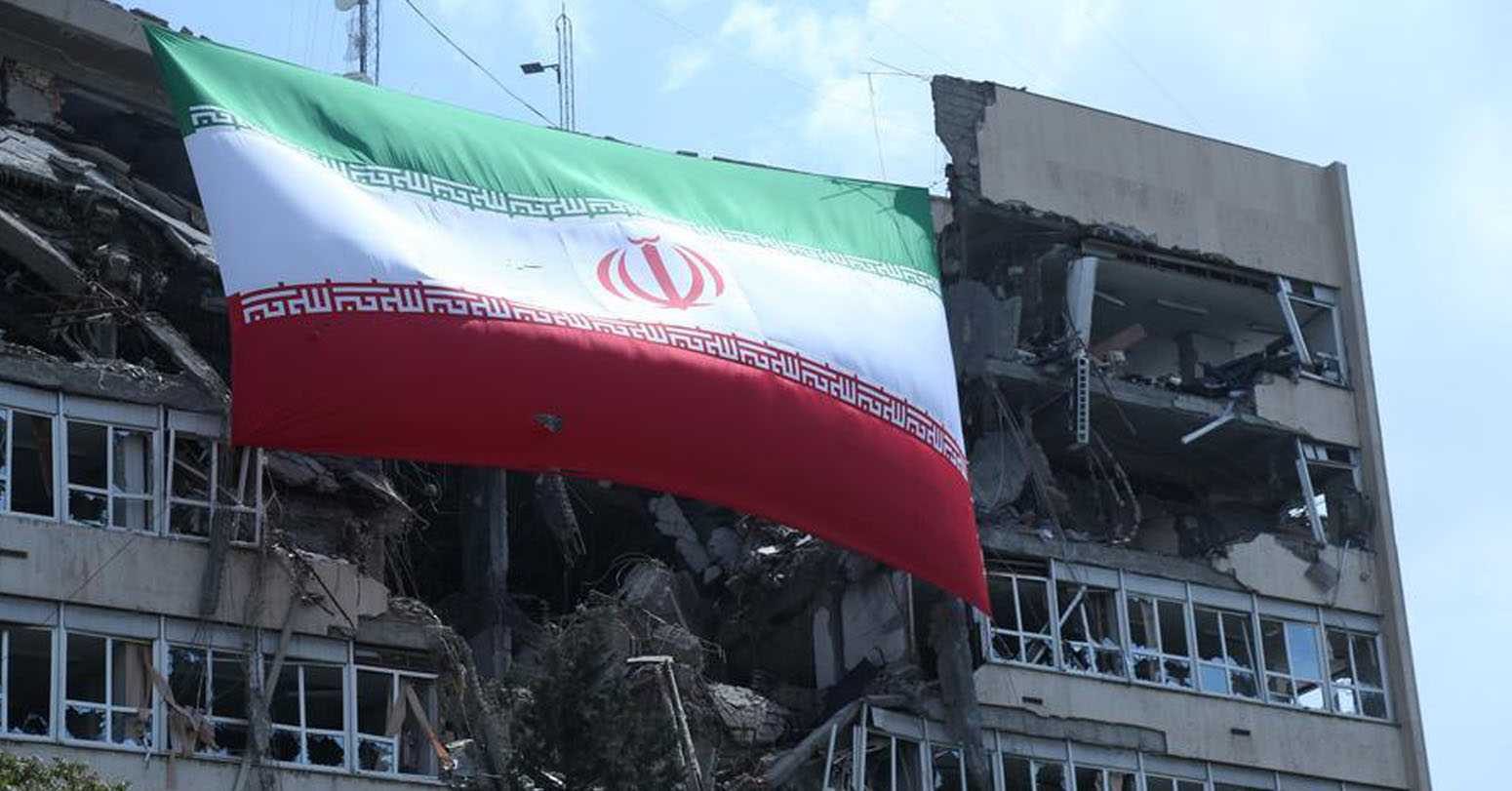
Even today, wars involving major powers continue. The Russia-Ukraine conflict and tensions involving Israel, Iran, and the United States are prominent examples. State-backed groups such as the Houthis and Hezbollah are also becoming involved in warfare. National interests continue to be pursued under the cover of ideological rivalry.
On one side, nuclear weapons continue to be tested; on the other, the Earth’s resources are relentlessly exploited. The result is an increasingly insecure planet. At the same time, business tycoons and technology moguls from developed nations are preparing to inhabit other worlds, effectively seeking an alternative to an increasingly insecure Earth.
Yet there is no place more reliable or safer for eight billion human beings and countless other living creatures than Earth itself. Protecting it is—and must remain—a shared responsibility of every nation, large or small, developed or underdeveloped.
Nepal is seeking justice, not merely compensation. This is a legitimate argument. Global environmental security is an issue of enormous importance, even though an immediate solution may not appear possible. Nevertheless, Nepal and the Nepali people must raise their voices against the injustice caused by natural disasters.
That voice must be a voice for justice. And Nepal’s large neighbors, India and China, should also echo and support it.
There are also bilateral and multilateral issues involved. On these matters, Nepal must articulate a clear policy rooted in the UN Charter, its principles, and its adopted policies. Although the Non-Aligned Movement currently appears dormant and the SAARC Charter remains inactive, the principles established by these institutions continue to provide an important protective shield for a country like Nepal.
For Nepal, aligning itself with war or violence, or taking a position against human rights, would be disastrous. The country must instead stand firmly for humanity and make a clear call for justice.
For Nepal, no interest can be greater than the welfare of its people and the nation itself.
With the confidence that the young Prime Minister Shah will present this truth before the global community, I wish him a successful journey.
Bishwakarma Puja Being Observed today
Two-Way Traffic Operates On Krishnabhir
Buddhakhari Foundation Honors 13 Community
OpenAI Reveals Six New Cases
NASA Scan Discovers New, ‘Once
Only ‘Idiots’ Believe N. Korea